Work in progress. Nothing here has been made or worn yet.
MOUTHPAD, FORKED
A tongue trackpad for a split tongue, worn with my grill.
Where this starts
I wrote to Augmental, who make the MouthPad, before buying one. I have a split tongue and a venom piercing through each half, and wanted to know if it would work.
Their cofounder wrote back the same day. They have never tested it with a split tongue, so they can't promise anything. The pad is single touch: it reads one point of contact at a time, not two. Tongue piercings should be fine, but no customer has had them yet either. They have worked with a few hundred people so far, none with big body mods.
That answer is the brief. A split tongue touches the roof of the mouth in two places at once. A single-touch pad sees that as one point halfway between the two, so the cursor would jump around. What I want is a pad that reads each half on its own.
The base: Augmental's MouthPad
MouthPad is a thin, custom-fit plate that sits on the roof of the mouth like a retainer. It is made from a dental scan, 3D printed in dental resin, with the electronics sealed inside. The tongue moves the cursor, a tap clicks, a sip right-clicks, and head movement can steer too. It pairs over Bluetooth with a phone or computer as an ordinary mouse.
- About 1 mm thick and 10 g
- 7+ hours of use, about 1.5 hours to charge, in a charging case
- Battery certified to UL 1642, IEC 62133 and UN 38.3
- $1,400, made to order, US only
It is a careful product, and it is the bar to clear. Everything below is about what changes, not about doing it cheaper.
What changes
- Two touches, not one. A multi-touch controller treats each half of the tongue as its own finger. Left half and right half can be left and right click, both together can scroll, and one half can steer while the other clicks.
- The piercings become pointers. The barbell balls are metal, and a capacitive pad sees metal touching it. Rather than filter them out, the firmware can track them as two sharp, steady points.
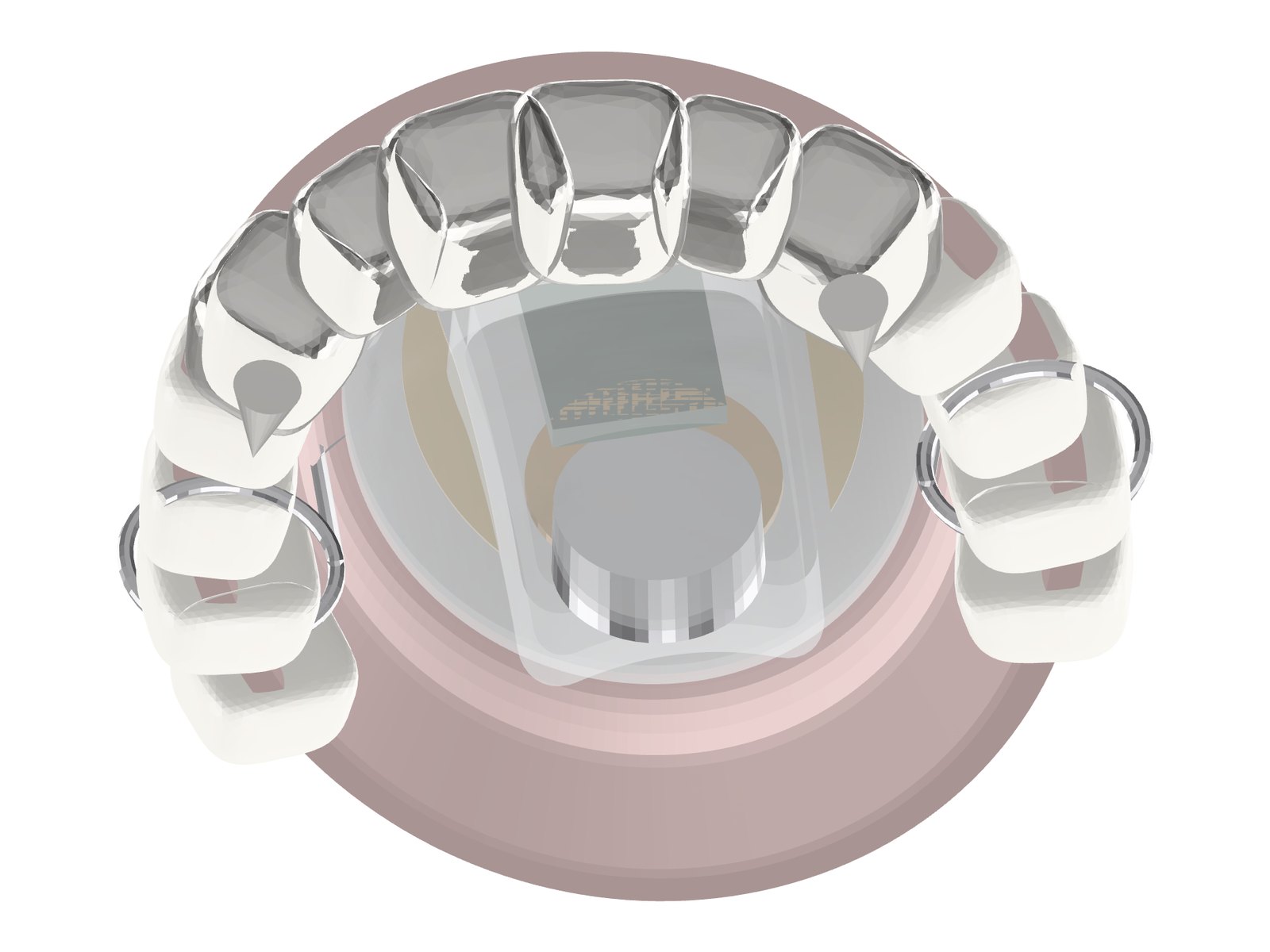
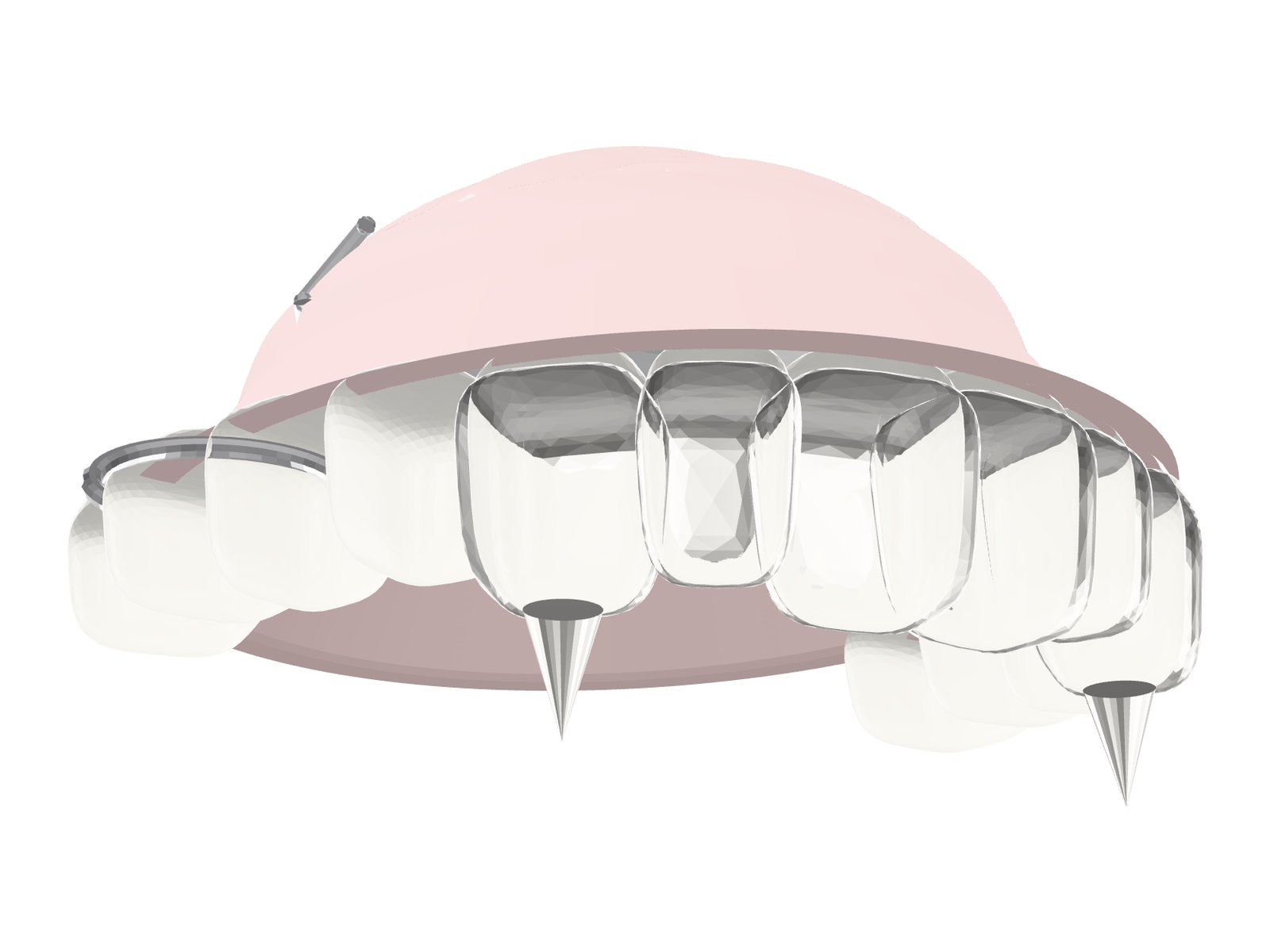
- It's worn with the grill. My upper grill is custom 10K white gold by labavaia in New York, over the six front teeth. The pad is a separate plate behind it on the palate, held by its own clasps, so the grill doesn't change.
- It's built for working hands-free. Paired with an AR headset, laptop or phone, it handles the clicks for approving things, scrolling and music without touching anything, and a held gesture starts voice input to prompt Claude.
What it looks like
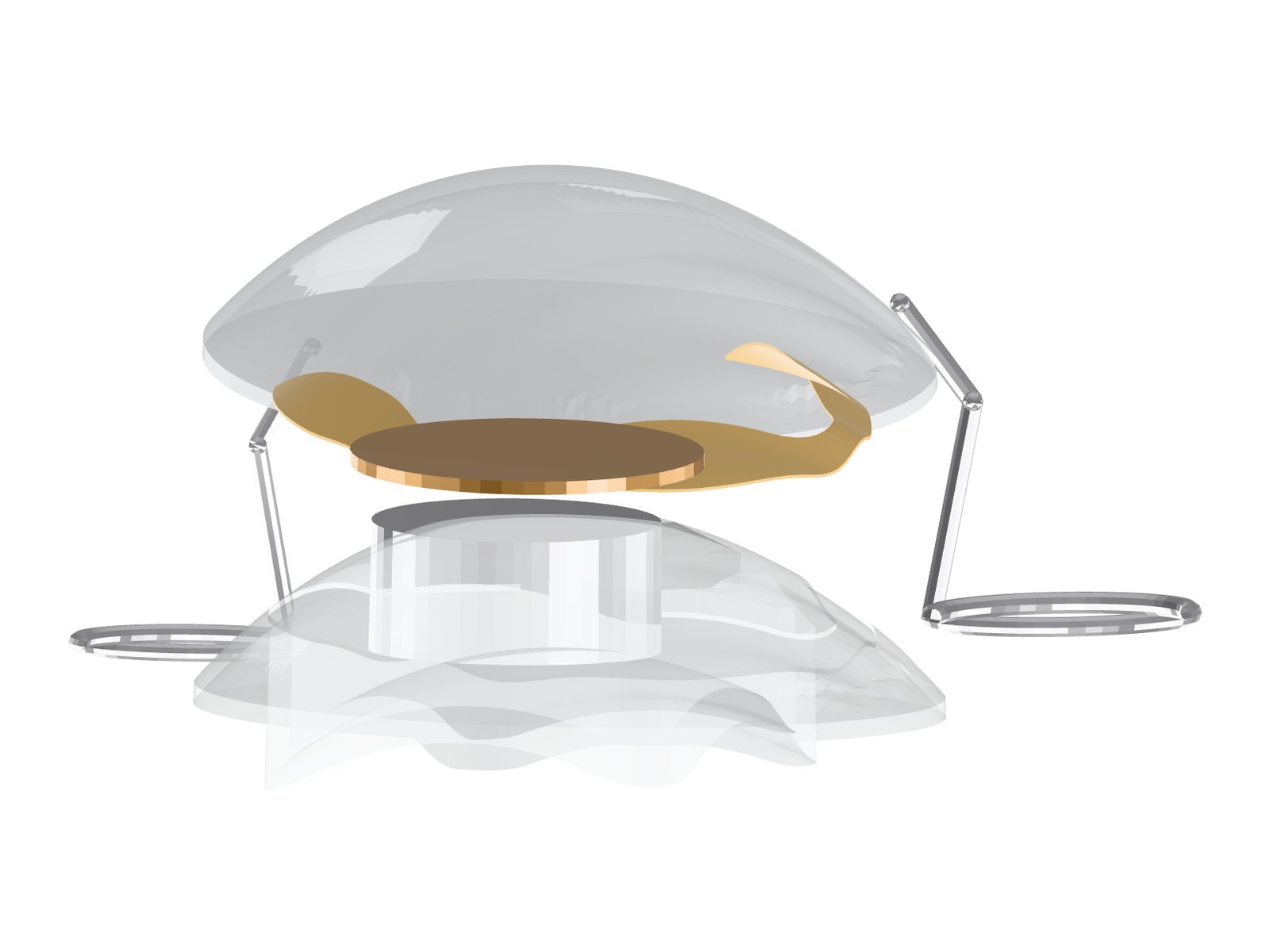
This is a stand-in mouth, not mine: a made-up palate and teeth, with a plain grill on the front six and fangs on the canines. The plate on it is real output from the plate script. When the scan comes in, these get remade on my own mouth.
Parts
First a bench rig, built and tested on the desk with fingers standing in for the two lobes. Only once the tracking feels right does anything get made small and sealed.
Bench rig, about $45
| Part | What it does | Buy |
|---|---|---|
| XIAO nRF52840 Sense | Bluetooth mouse, keyboard and media keys, a motion sensor for head steering, and a charger. 21 x 17.5 mm. | Seeed, ~$16 |
| Azoteq TPS43-201A-S | 43 x 40 mm trackpad that tracks several touches at once. Stands in for the palate sensor. | DigiKey, ~$4 |
| 20-pin FPC breakout | Turns the trackpad's flat cable into pins you can wire. | Adafruit 1325, ~$3 |
| 100 mAh LiPo cell | Runs the rig away from USB. Desk only. | Adafruit 1570, ~$6 |
| Trill Flex | Bendable touch strip, to try following a curve. Optional. | Bela, ~$18 |
The real thing, later
These are made in small numbers by a board shop and a dental lab, not bought loose. The links are where each part comes from.
| Part | What it does | Where from |
|---|---|---|
| Rigid-flex PCB | The touch grid cut to the palate, with all the electronics on a 10 mm square island. | PCBWay, JLCPCB |
| Azoteq IQS7211E | Reads the grid and tracks two touches, one per lobe. | DigiKey |
| u-blox ANNA-B402 | A 6.5 mm certified Bluetooth module with its own antenna. | u-blox, DigiKey |
| Bosch BMI270 | Motion sensor for head steering. | DigiKey |
| VARTA CoinPower CP1254 A4 | Rechargeable cell in a sealed steel can, 12 x 5.4 mm, ~70 mAh. Sturdier than a soft pouch cell. | Rapid, DigiKey |
| TI BQ2970 | Protection chip for the cell: cuts off on short, overcharge and overdrain. | TI |
| TI BQ25120A + BQ51003 | Wireless charging and power, so the sealed plate needs no port. Charges gently, to 4.2 V. | TI, TI |
| Würth 760308101219 | The charging coil, 0.6 mm thick, under the cell. | DigiKey |
| Knowles V2S200D | A sealed voice sensor of the kind earbuds use. It hears speech through the resin with no open hole. Phase two. | DigiKey |
| Parylene C | A thin film over the electronics, the first of two seals. Medical grade. | SCS Coatings |
| Dental LT Clear V2 | Splint resin for the plate, printed and cured by a dental lab. The second seal. | Formlabs |
| Qi charging pad | Any small Qi pad. The plate charges on it, out of the mouth. | Any shop |
By estimate it should last 15 to 18 hours on a charge, against MouthPad's 7+, but that hasn't been measured.
Using it
It shows up as an ordinary Bluetooth mouse and keyboard, so it works with a laptop, phone or AR headset without an app. It has three modes, and tapping both lobes twice moves to the next one.
- Pointer: one lobe moves the cursor. Tap the left lobe to left-click and the right to right-click, for approving windows. Tap both to lock the button down for drawing or dragging. A long hold of the right lobe switches on steering with small head turns.
- Scroll: draw a lobe back for the next video or post, the way you'd swipe up.
- Media: tap right for the next song, left for the previous, both to pause, and slide for volume. It's silent, for a busy shared shop.
- Voice: hold both lobes to talk to Claude, and let go to stop. For now this uses the computer's or headset's own microphone. Later a sealed voice sensor in the plate could do it.
Joining it to the grill
No glue. Anything strong enough to hold electronics in place can't be taken off at home, and anything that peels off easily can come loose in the mouth.
The plate is separate from the grill. A dental lab prints it from the scan, in two layers with the electronics sealed between them, and sets small wire clasps on the back teeth, like a retainer. The grill stays exactly as it is. The plate goes in after the grill and comes out first.
The plate's shape comes straight from the scan. A script reads the palate, builds the plate 1.6 mm thick with 0.6 mm of resin over the touch grid, and makes room for the cell and electronics at the back, where the tongue does the least work. Tested on a stand-in palate, it comes out as clean, printable parts.
Risks
- Battery in the mouth. A crushed or bitten cell can overheat, leak or burn. The cell has to be certified, protected against short and overcharge, and set where teeth and fangs can't reach it. Never charge it while wearing it.
- Swallowing and choking. The plate must hold firmly on its own clasps, with no small parts that can break off. Don't sleep in it.
- Toxicity. Only dental or medical-grade materials touch the mouth, and printed resin is only safe once washed and cured to the maker's spec. Lead-free solder, fully sealed. Saliva gets into any crack, so the seal is checked, not assumed.
- Metals. 10K white gold often contains nickel. Adding other metals in saliva (magnets, steel, solder) can cause a metallic taste or small galvanic currents, so no bare metal on the plate.
- Heat. The Bluetooth chip barely warms. Charging does, which is one more reason it charges out of the mouth.
- Teeth and gums. A plate behind a grill traps plaque and changes how the mouth closes. Short sessions, cleaned after every use.
Before anything goes in my mouth, a dentist and labavaia look at the plan.
Next
- Get the oral scan, and run it through the plate script.
- Build the bench rig and tune the two-lobe gestures with fingers.
- Show the plan and the plate to a dentist and to labavaia.