Fairy Ring
Vibe CAD for real things / talk, point, and it gets made
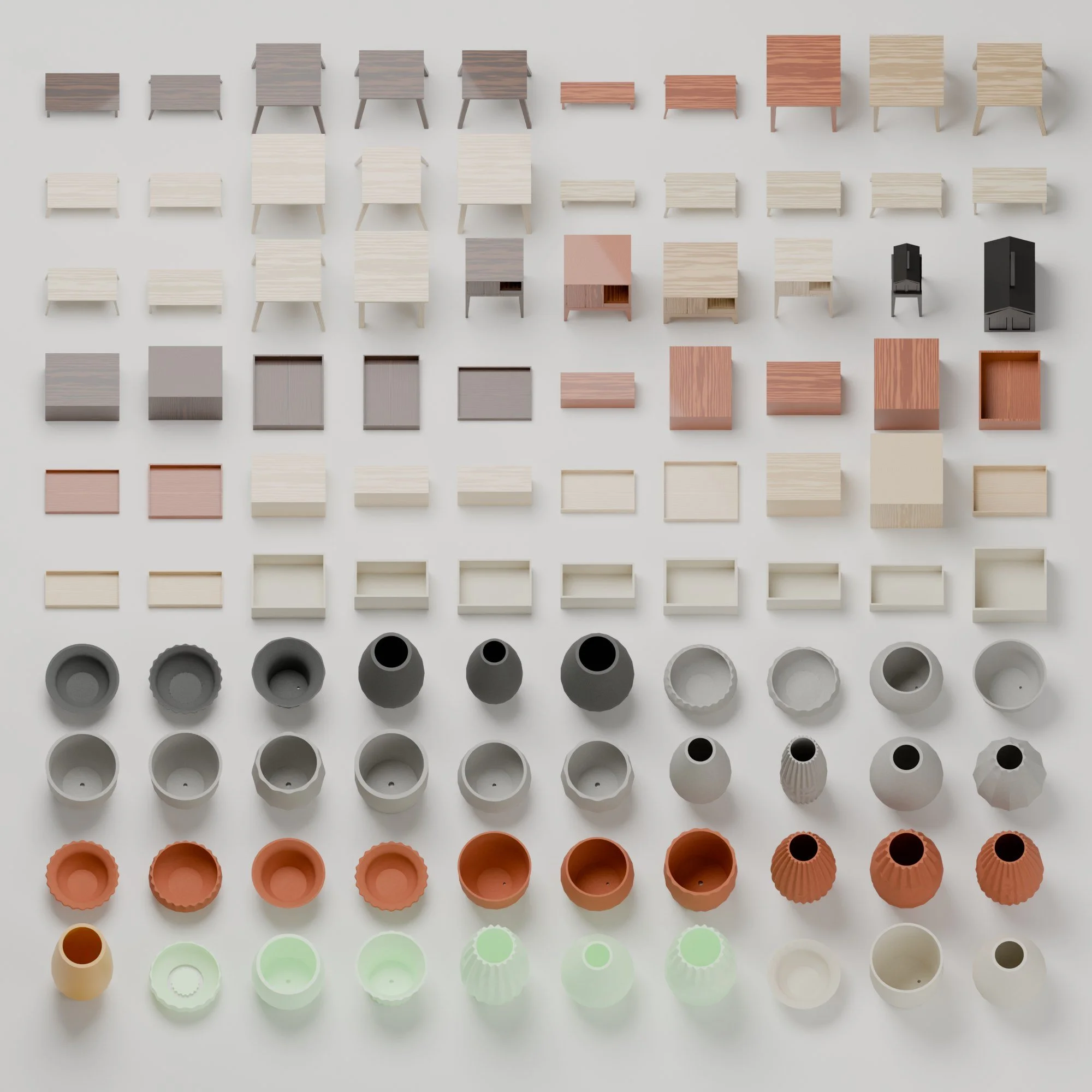
Put on a Quest and say what's in your head. “Taper the legs this much.” “Spin it like this.” The model changes live, full size in the room, while your hands show the sizes. When it's right, Fairy Ring makes it: cut files with the joints already solved, printable molds, a build plan with a cut list, a parts cart, and a job for whichever dancer in the ring can do it. Nothing is ever bought without you.
How it works
Say it / see it / make it
- Say it, show it. Hold the pad key and talk. Hands fill in the numbers: “this wide” reads the gap between your palms, and the edit commits when your hand holds still or you say “there.”
- Fairy Ring edits. Simple commands skip the AI and land in a tenth of a second. Anything else goes to Claude, which calls the same CAD tools. Every edit is a saved version, so undo is free.
- Make it. Cut files with box joints and kerf, molds sized to the printer bed, a build plan you walk with “next step,” carts grouped by vendor, and jobs routed to the machines below.
The two Quests
One on your head / one on the rail
- The one you wear. Passthrough puts the model in the room at true size. Hand tracking turns gestures into dimensions, with a ghost preview until you commit.
- The one on the rail. Mounted upside down with the strap off, it becomes a room camera. With two webcams it feeds the camera wall, so Fairy Ring can see the bench, the boards and the molds.
- Anchor tags. Six-inch AprilTag cards on the bench, the machines and every rough-milled blank tie both headsets to the real room, so a scanned board and a model line up to the millimetre.
Where the work goes
Fairy Ring designs it / the dancers make it
- 00 / Design
- Fairy RingSay it, show it, see it full size. Then “make it.”
- 01 / Scan in
- VogueScans of objects, molds and parts
- 02 / Cut and draw
- Drag QueenVeneer cut files
- Lady LinerLayout lines and templates
- MortishaJoinery toolpaths
- Lathe MinnelliTurning profiles
- 03 / Form
- Queen BeeWax prints for casting
- MotherGrow molds
- Mud DivaClay and concrete cores
- Slip KittenPlaster molds to slip-cast
- Pour DecisionsConcrete and resin pours to settle
- Skin TightVacuum-formed trays and covers
- Cher BendBending forms cut from a curve
- Bog WitchLiving moss panels
- Hot FlashBake, burnout and drying schedules
- 04 / Finish
- Flex AppealVeneer and bent-lamination presses
- Honey GlazeGlue lines and finish passes
- Sandra PaperSanding passes
- Glow DivaGlow fill paths
- Cane-DaceWeaving patterns
- 05 / Serve
- HandmaidenPlate swaps and sheet loading
- Dusty SpringfieldWhich gates to open
- Moisture MadameBoards to dry and weigh
- 06 / Recycle
- LazarellaFailed prints and wax scraps
- On the road
- The rigThe tower, monitors, battery and cameras in one rolling case.
One piece, start to finish
A walnut stool / from a sentence to a finished piece
- Say it. “A three-legged stool, 18 inches tall, walnut seat, splayed legs.” Fairy Ring builds it live in the room.
- Show it. Hands set the seat width and the splay. “Thinner.” “There.” Every change is saved.
- See it. Walk around it at full size. Sit on a real chair beside it to check the height.
- Make it. Fairy Ring writes the cut list, the leg tenons for Mortisha, a seat veneer pattern for Drag Queen, layout lines for Lady Liner, and a cart for the walnut.
- Build it. Mortisha cuts the joints. Drag Queen and Flex Appeal lay the veneer. Honey Glaze glues and oils it. “Next step” walks you through the rest.
- Keep it. Vogue scans the finished stool for the site, and every offcut is logged for the next piece.
Hands
Six gestures / show the size instead of saying it
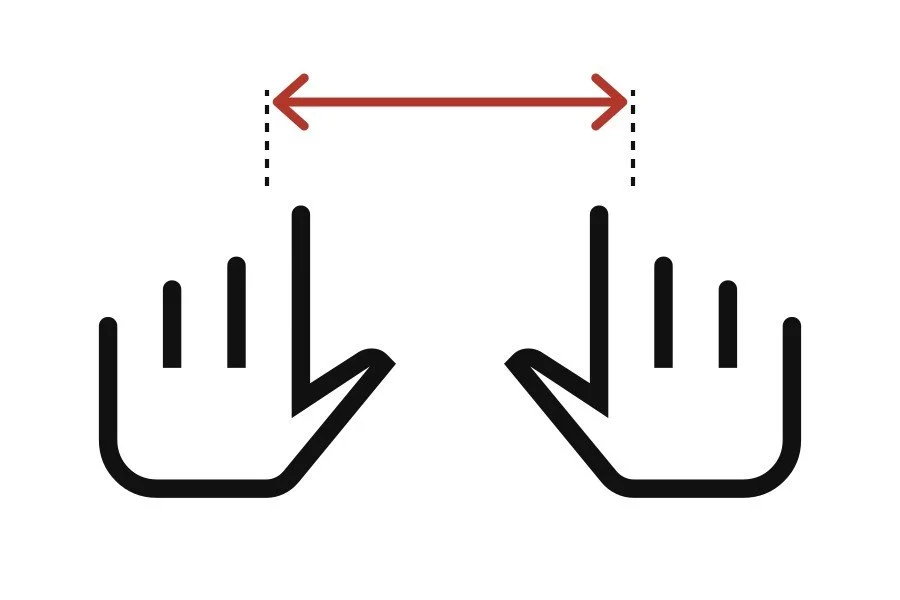 Spantwo hands
“Make it this wide.” Hold both hands up. The gap between your two index fingertips becomes the size, taken literally. Turn your hands upright for “this tall.”
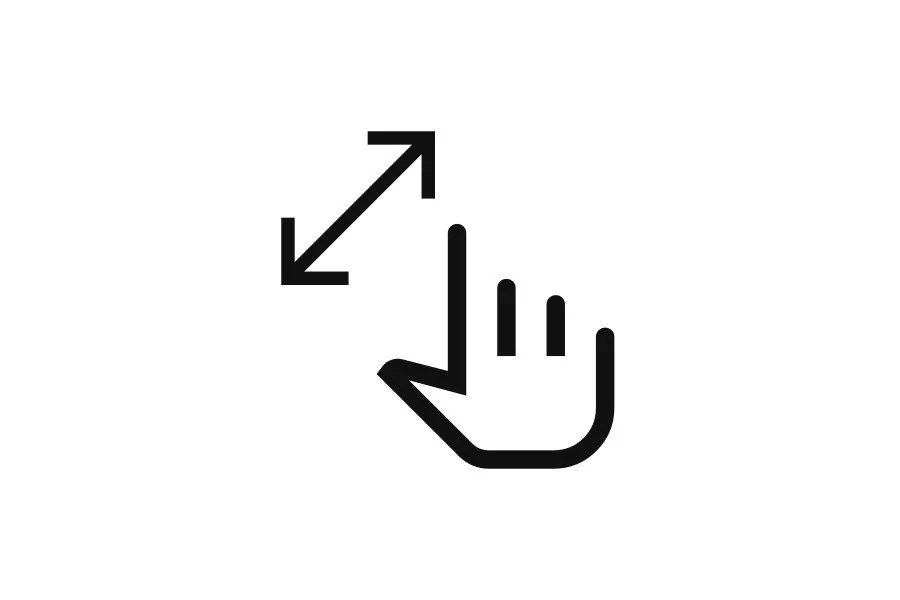 Pinchone hand
“Taper the legs this much.” Open your thumb and index finger. Closed is the smallest the setting goes and 4 3/4 in apart is the largest.
 Dragone finger
“Move it this way.” Point and slide your index finger. The part follows the fingertip.
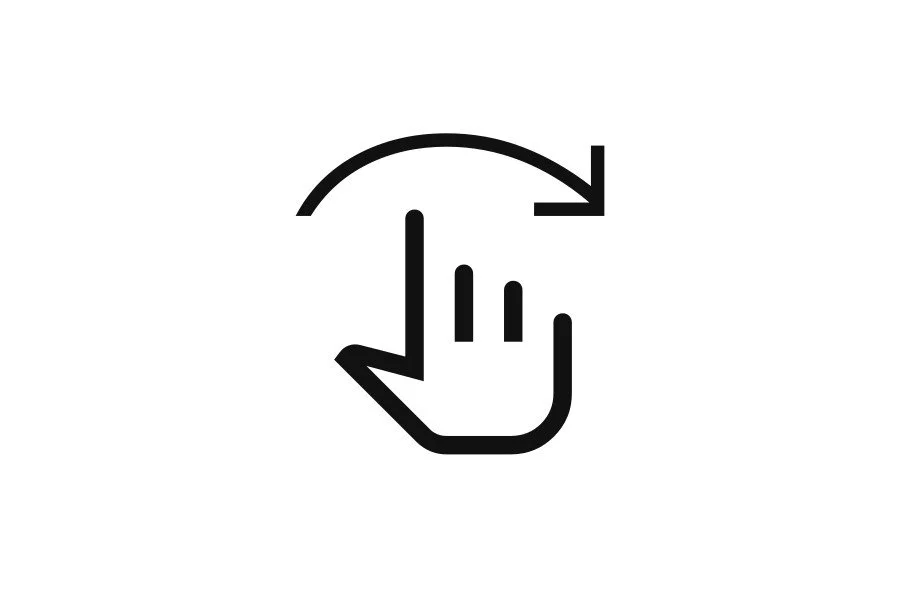
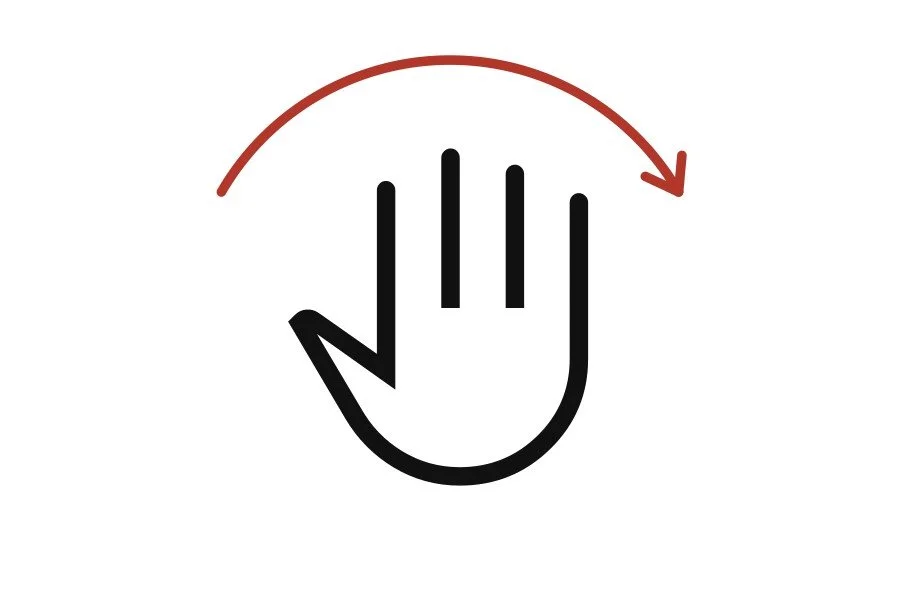 Twistone wrist
“Spin it like this.” Turn your wrist. Turning it flat spins the model; rolling it sets an angle such as leg splay.
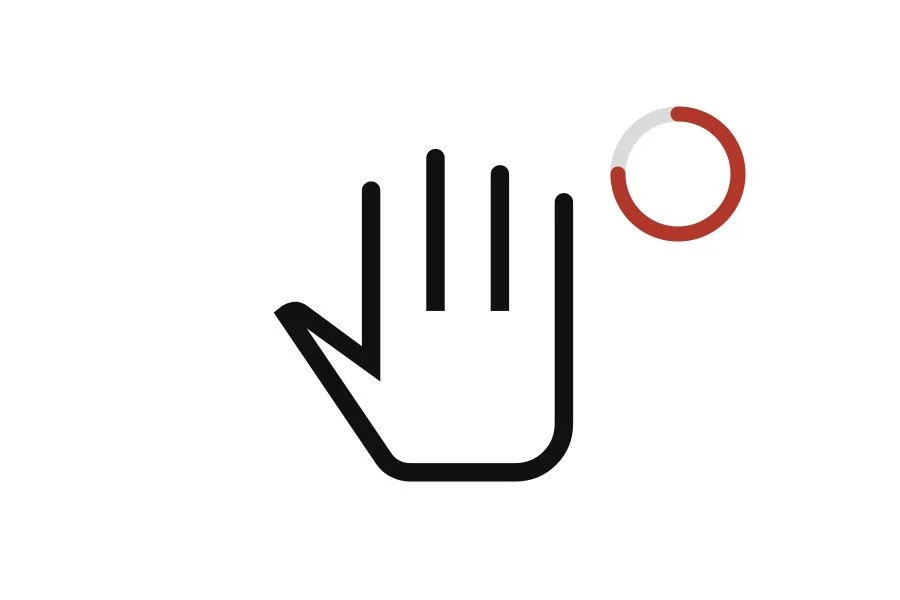 Hold stillcommit
A ghost of the change follows your hand live. Hold still for under a second and it commits.
 Say “there”commit
Or say “there” or “done” to commit right away. Say “undo” to take it back.
Keys and dials
Two 6 × 5 macro pads and a dial pad / every key, and what it does
Left pad / shape it
Right pad / see it and make it
Dial pad / walk the build
- Big dial, turn
- Nudges whatever you last changed, one small step per click: about 3%, rounded to 1/16 in.
- Big dial, press
- Cycles what it nudges: height, width, depth, thickness.
- Left touch strip
- Slide to zoom. Tap to stop a spin.
- Right touch strip
- Tap for the next saved version, hold for the previous one.
- Space bar
- Push to talk, same as the Talk key.
Every key works on any model. When a key doesn’t fit, Fairy Ring says so (“This model has no repeating pattern”). Red keys talk and commit; tan keys flip saved versions.
Things you can say
A cheat sheet / plain words, no menus
| “Make it 20 percent taller.”Scales one direction. | |
| “This wide.”Reads the gap between your hands. | |
| “Taper the legs to an inch at the foot.”Named part, named size. | |
| “Round the edges a quarter inch.”Fillets every outside edge. | |
| “Box joints on all four corners.”Solves the joints for the sheet and the kerf. | |
| “Show me it in cherry.”Swaps the material look. | |
| “Undo.” / “Go back three.”Every edit is a version. | |
| “Make the mother mold.”Writes a Mother grow mold for the shape. | |
| “Print it in wax.”Sends it to Queen Bee with the casting blend. | |
| “What does it cost?”Parts and material total, nothing bought. | |
| “Next step.”Walks the build plan. | |
| “Send it to the ring.”Splits the job across the dancers. |
Materials in the ring
What Fairy Ring knows how to make things from
- Hardwood
- Walnut, maple, cherry, oak. Joinery on Mortisha, finish on Honey Glaze.
- Veneer
- Figured and rare woods, cut on Drag Queen, laid in Flex Appeal.
- Plywood
- Baltic birch for jigs, carcasses and the rig.
- Beeswax
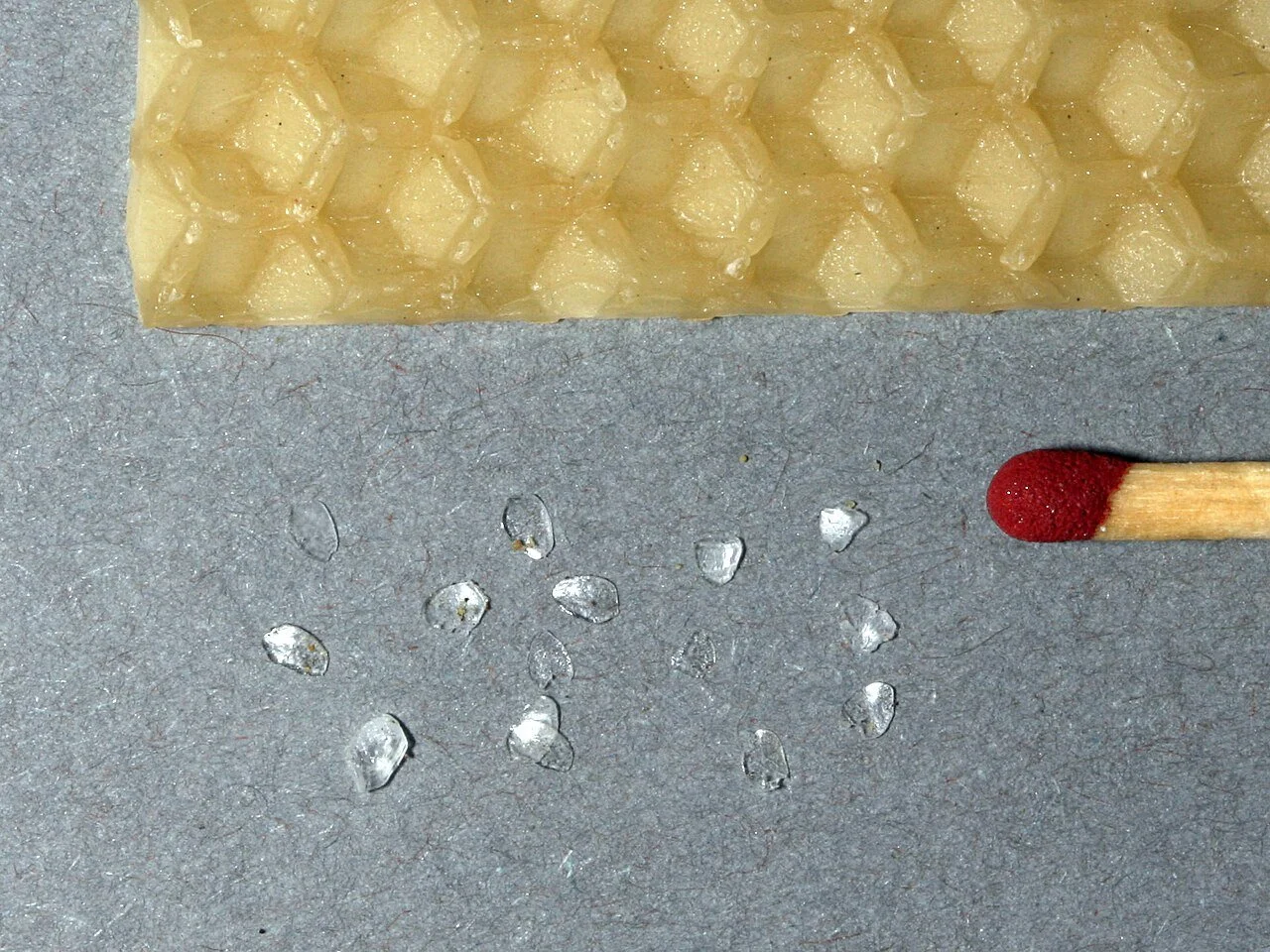
- Printed on Queen Bee, for objects or for casting.
- Mycelium
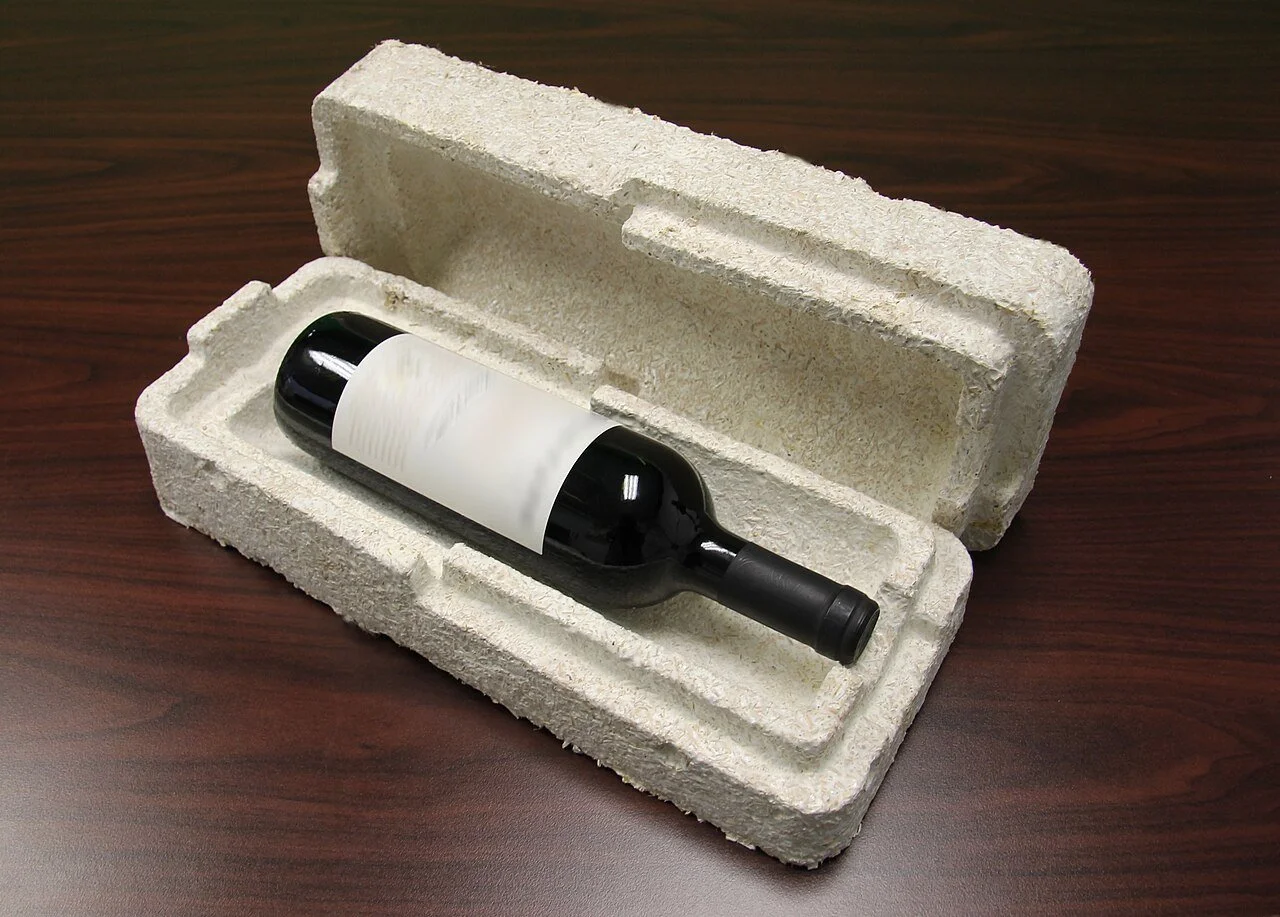
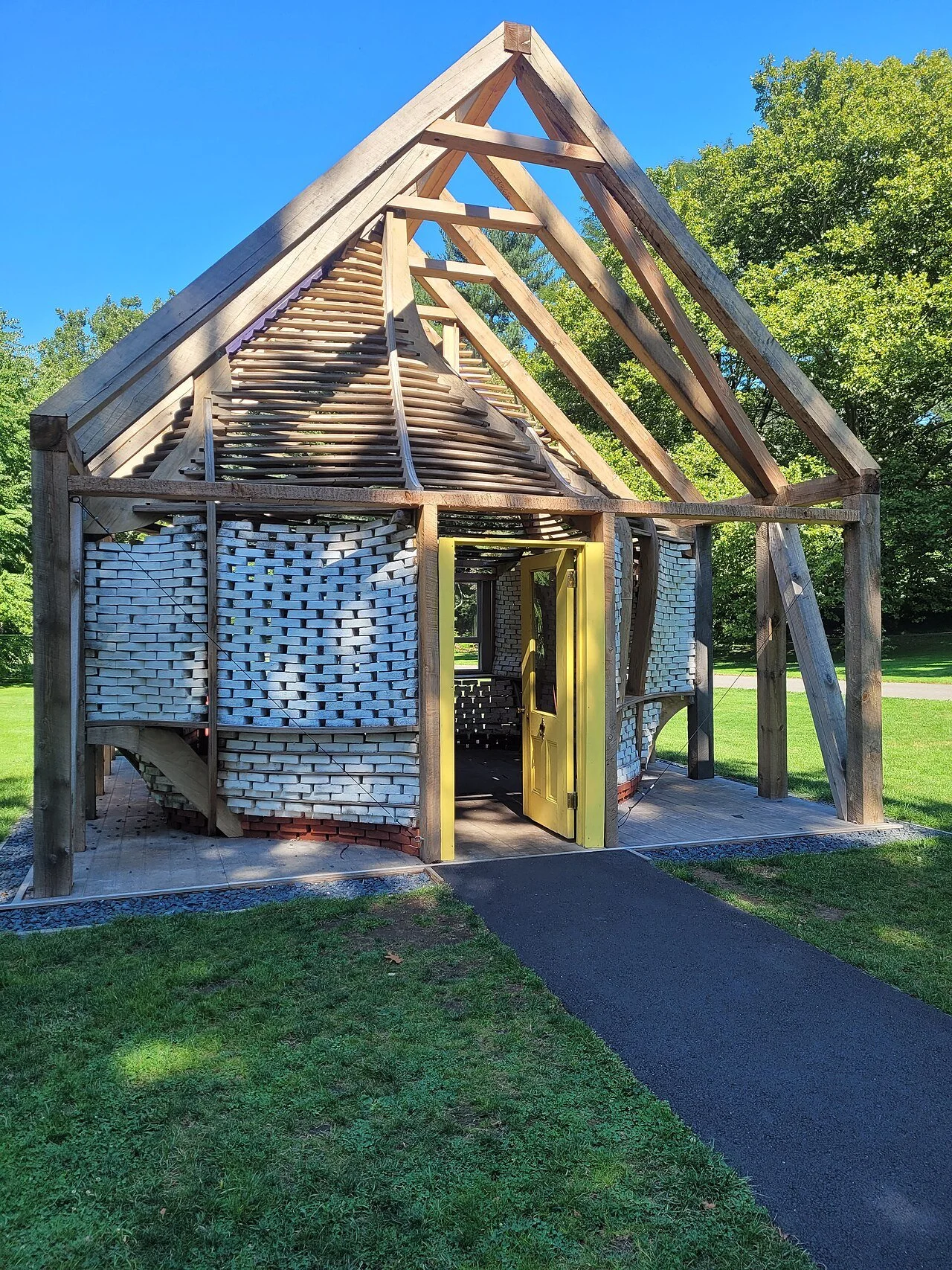
- Grown on Mother, for shapes, packaging and insulating forms.
- Clay
- Printed on Mud Diva, as pots or as reusable formwork.
- Concrete
- Fine cement paste, printed or poured into clay.
- PETG and HIPS
- Vacuum-formed by Skin Tight for trays, covers and molds.
- PLA
- Printed parts, and back to filament through Lazarella.
- Acrylic
- Cut on the xTool for cradles, guards and display.
Recipes for wax, mycelium, clay, concrete, glue and plastic are on each machine →
How mycelium works
The living glue behind Mother / from one thread to a fairy ring

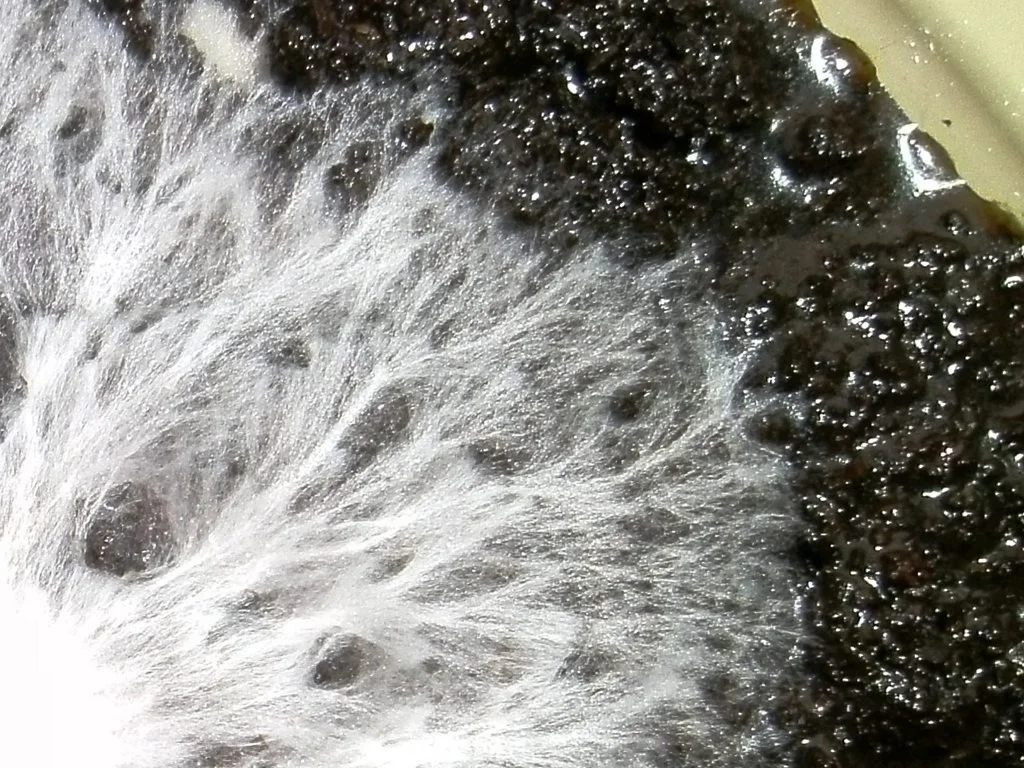
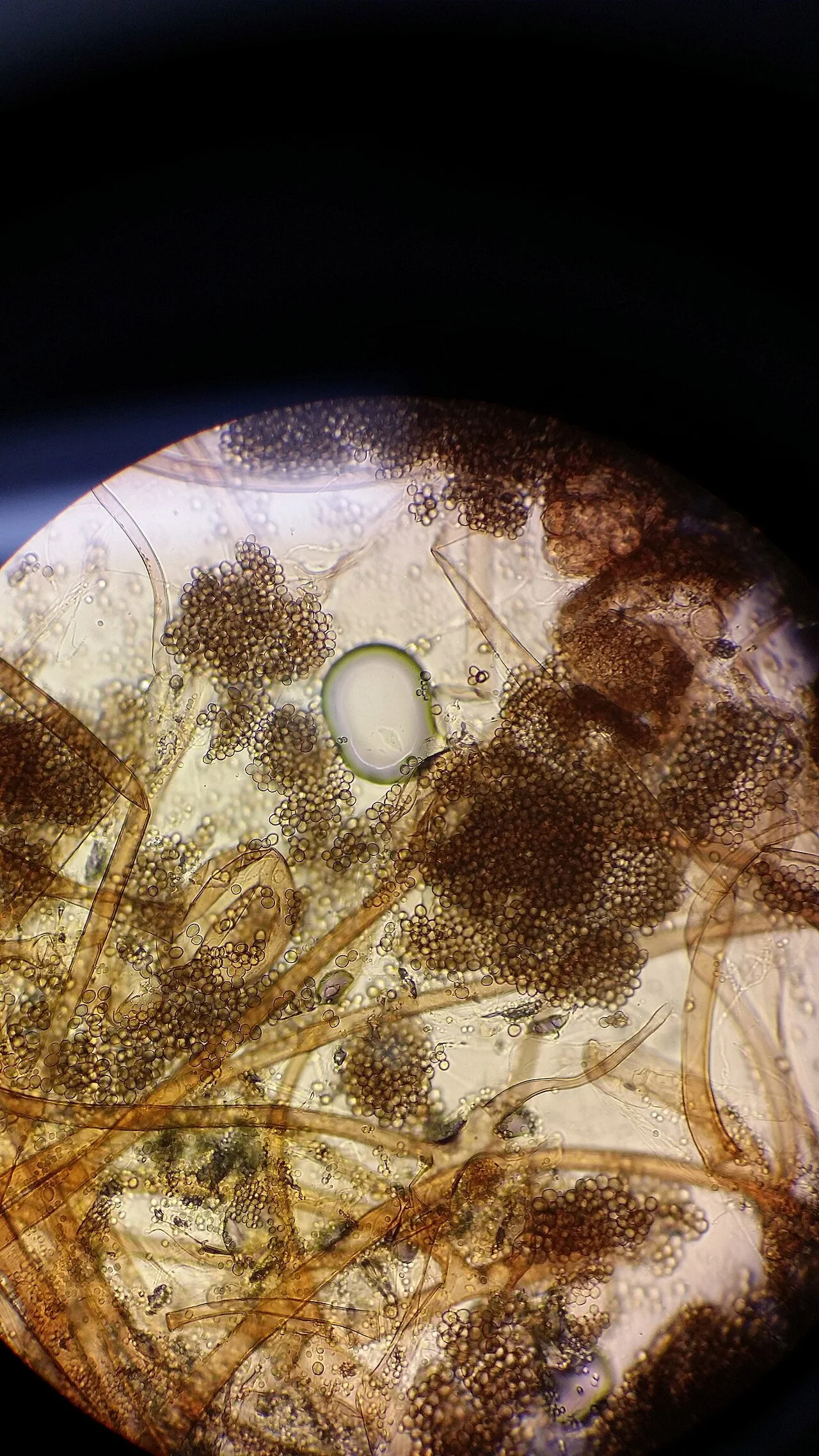
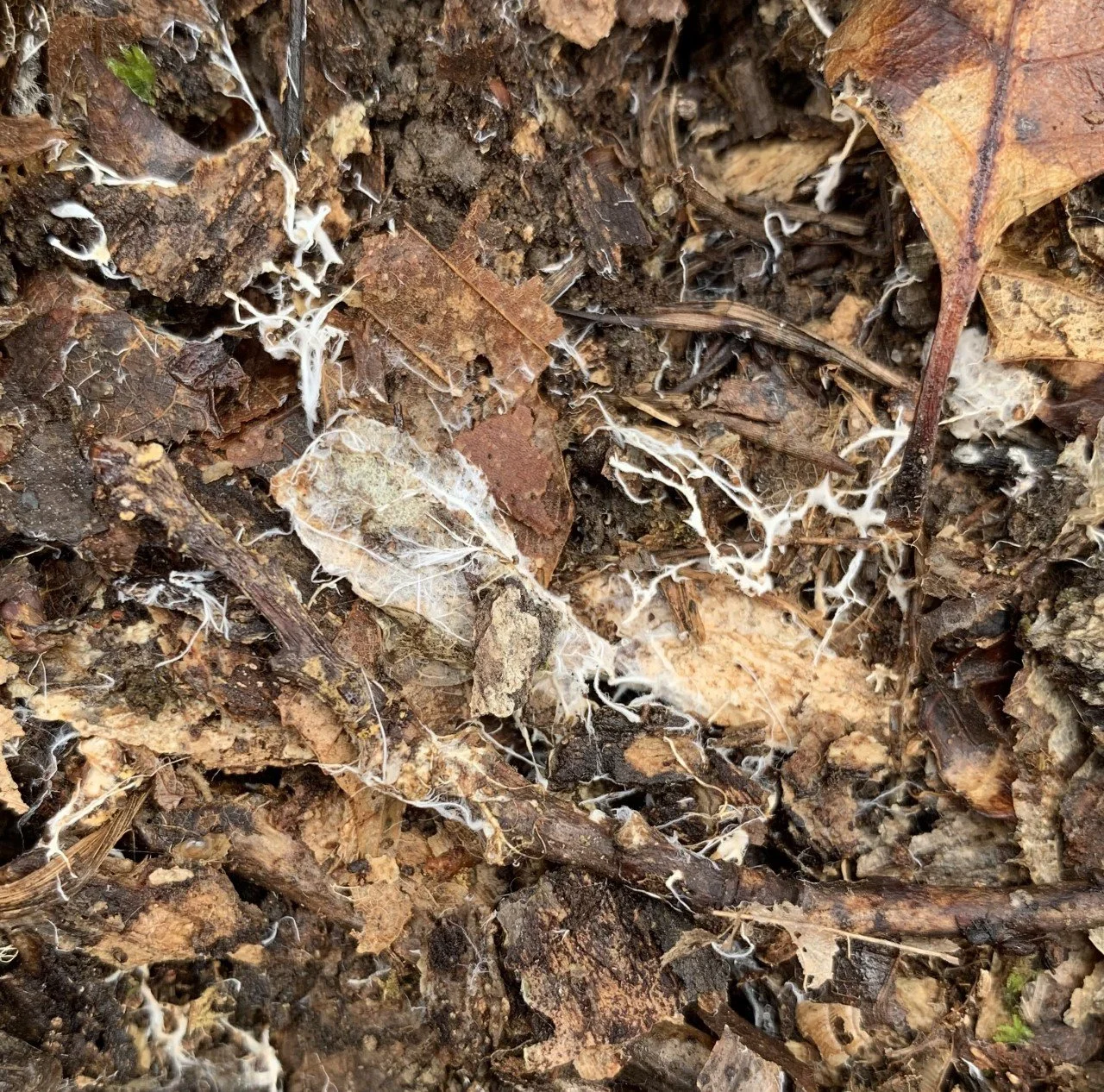
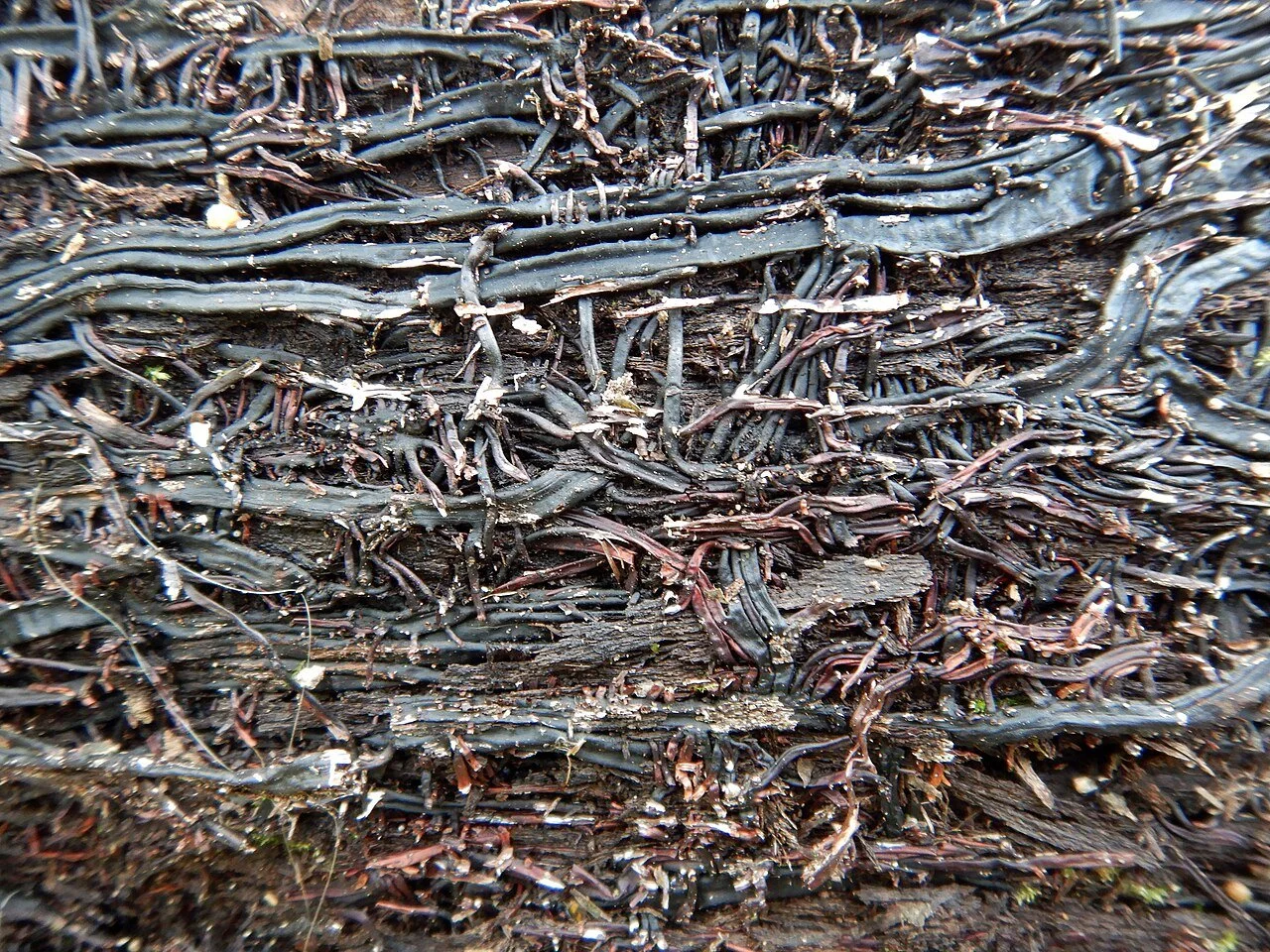
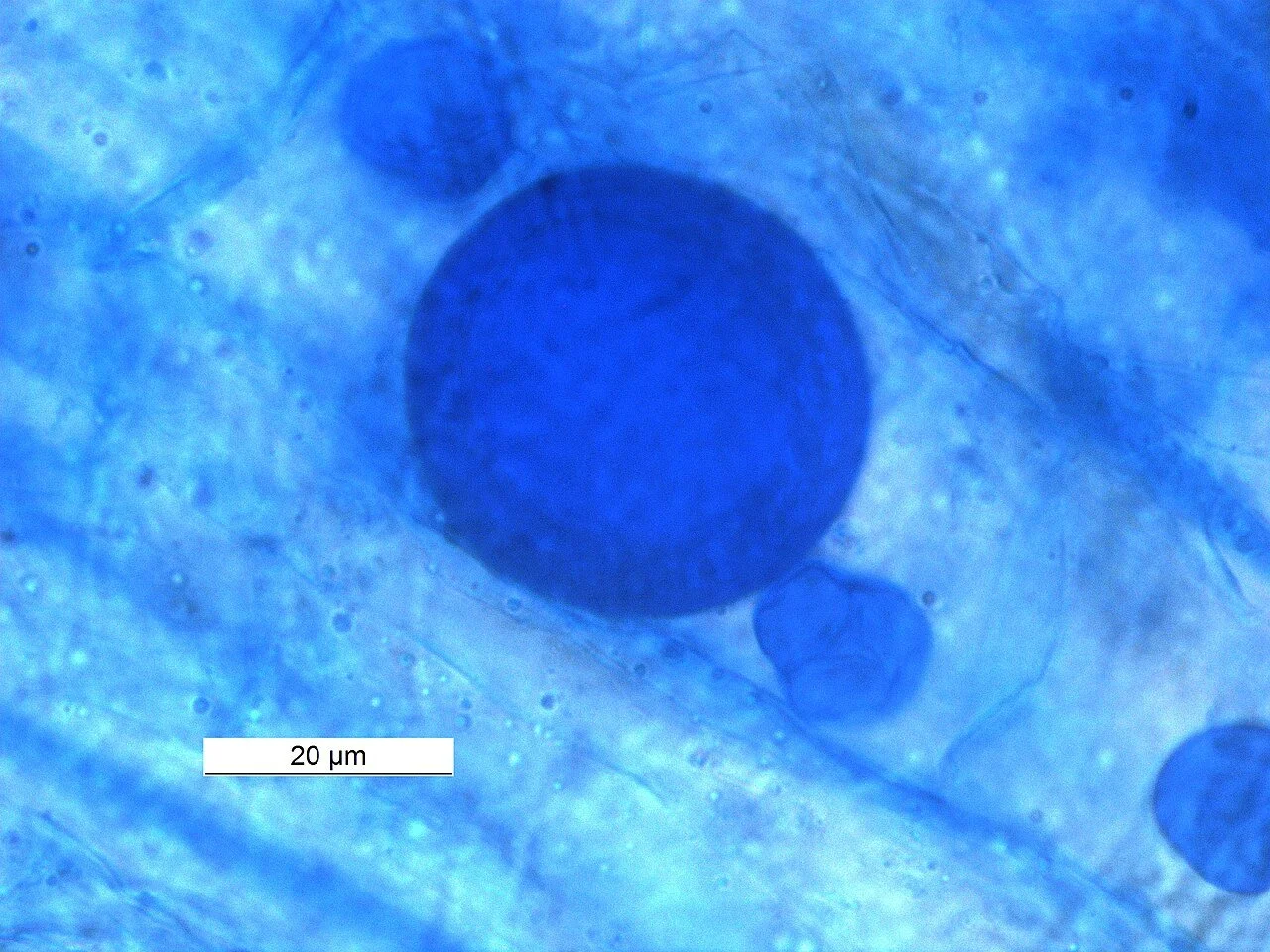
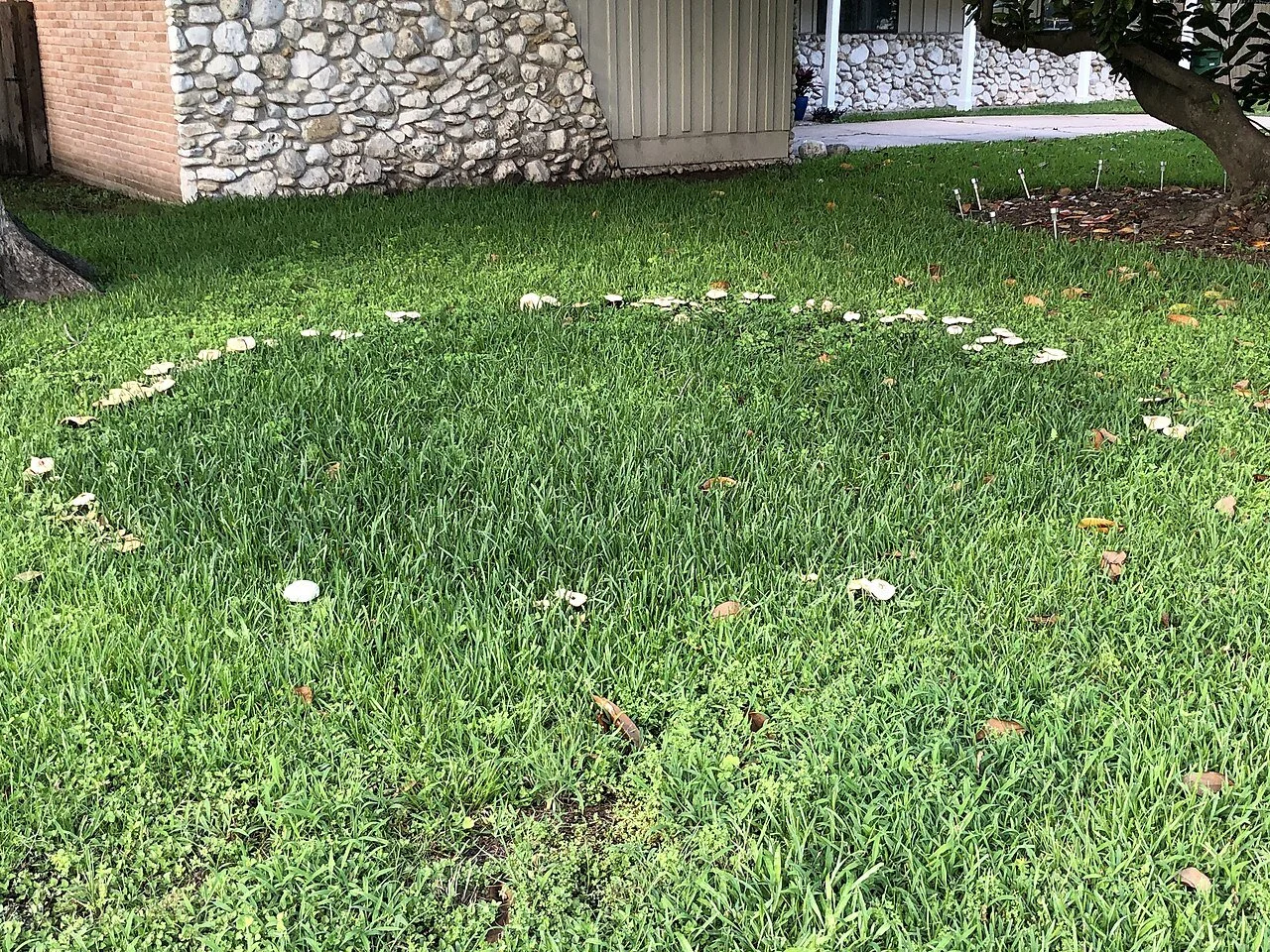

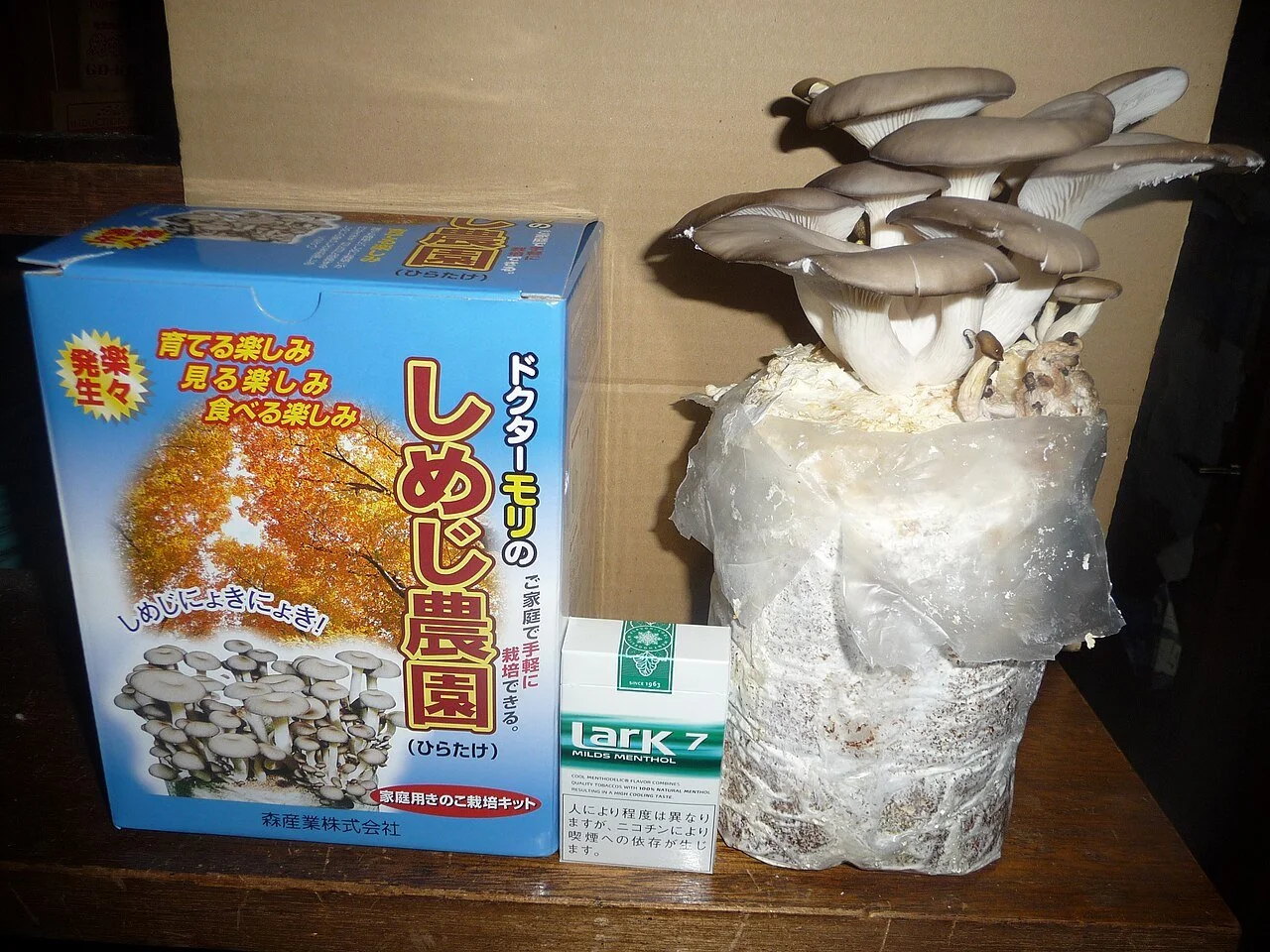

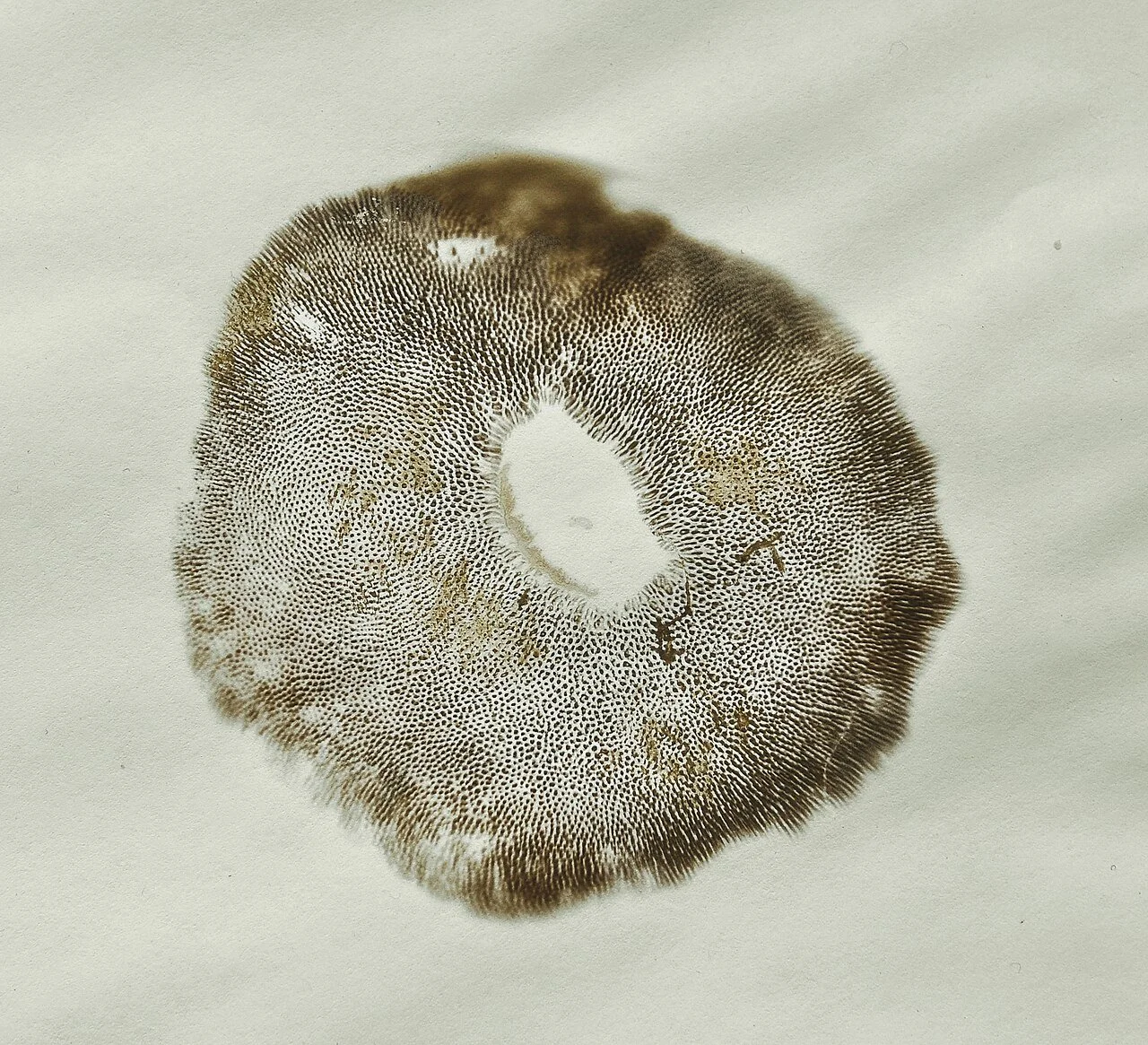
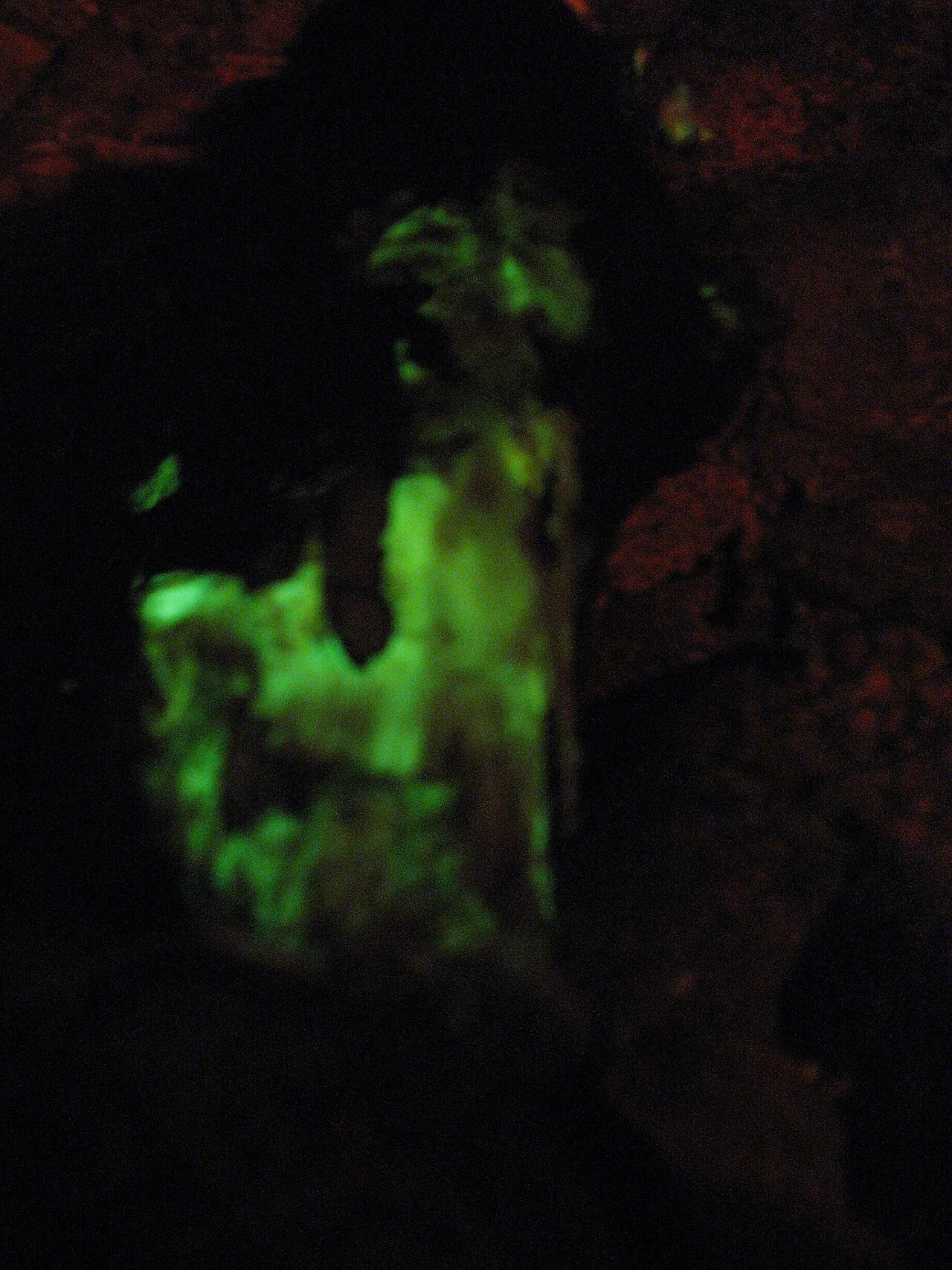
Photos via Wikimedia Commons, left to right: 1 Tobi Kellner (CC BY-SA 3.0); 2 Tobi Kellner (CC BY-SA 3.0); 3 Emilio Bosch (CC BY-SA 4.0); 4 PerytonMango (CC BY-SA 4.0); 5 Lamiot (CC BY-SA 4.0); 6 Rajarshi Rit (CC BY 4.0); 7 Edward O. Uthman (CC BY-SA 4.0); 8 Karel Adriaan (CC BY-SA 4.0); 9 Chatama (Public domain); 10 Kieran Roy Powell (CC BY 4.0); 11 The High Fin Sperm Whale (CC BY-SA 3.0); 12 Bruce McAdam (CC BY-SA 2.0); 13 Mycobond (CC BY-SA 2.0); 14 SnowFire (CC BY 4.0).
How bees make wax
The material behind Queen Bee / from flower to block

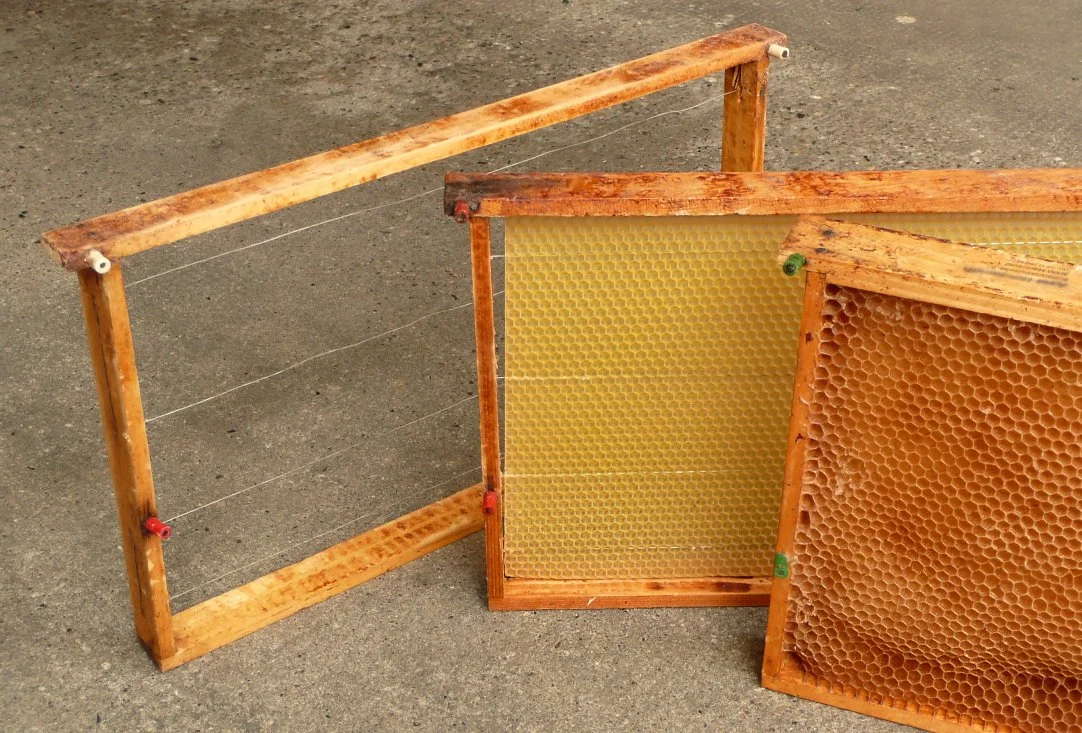
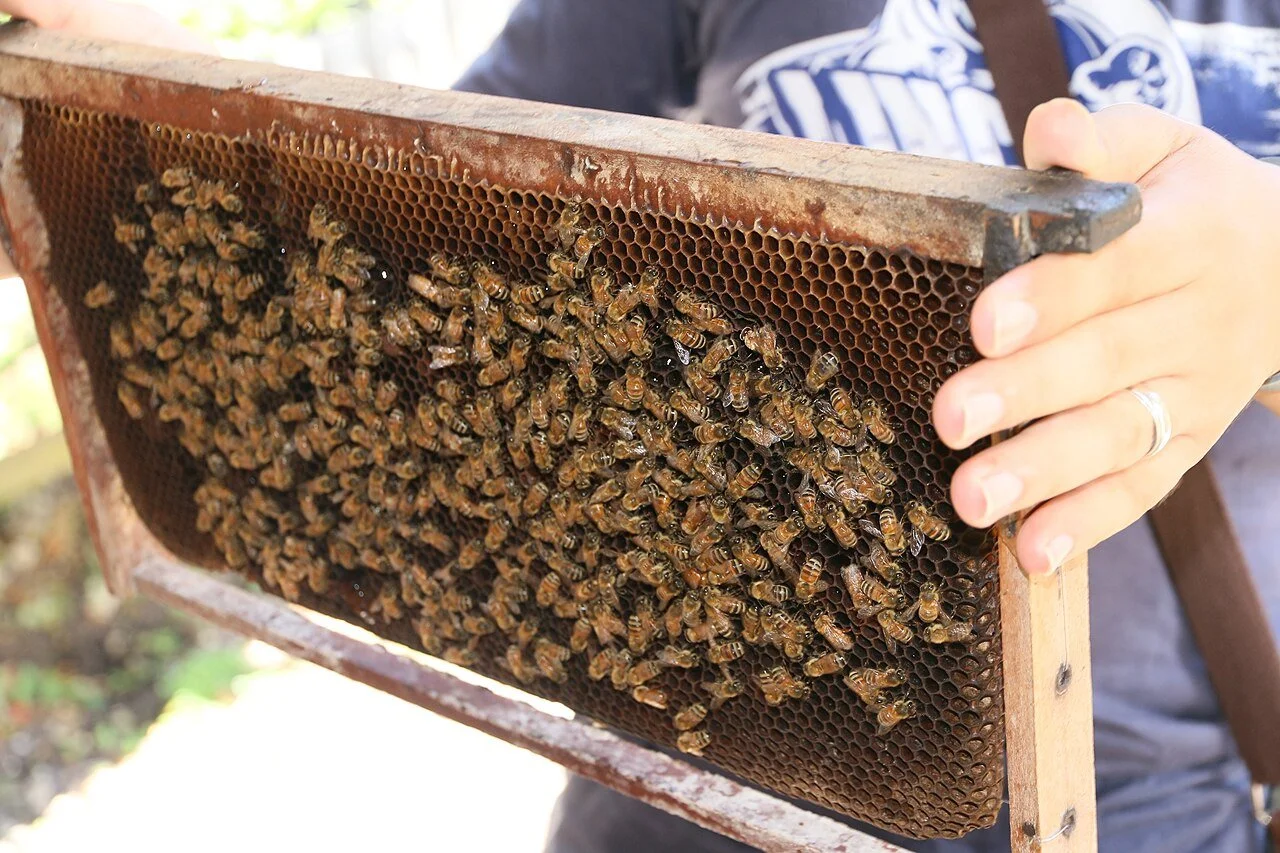
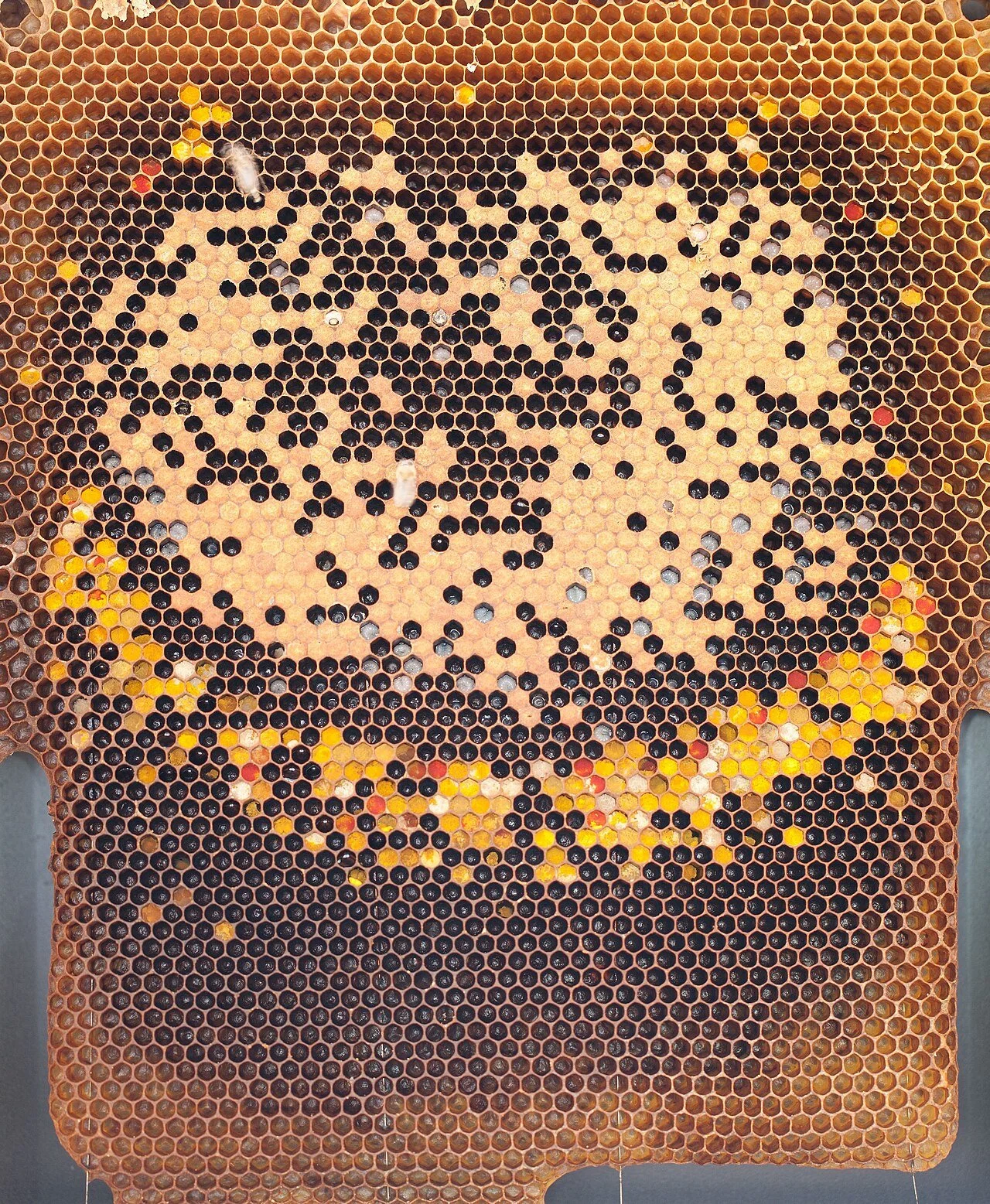

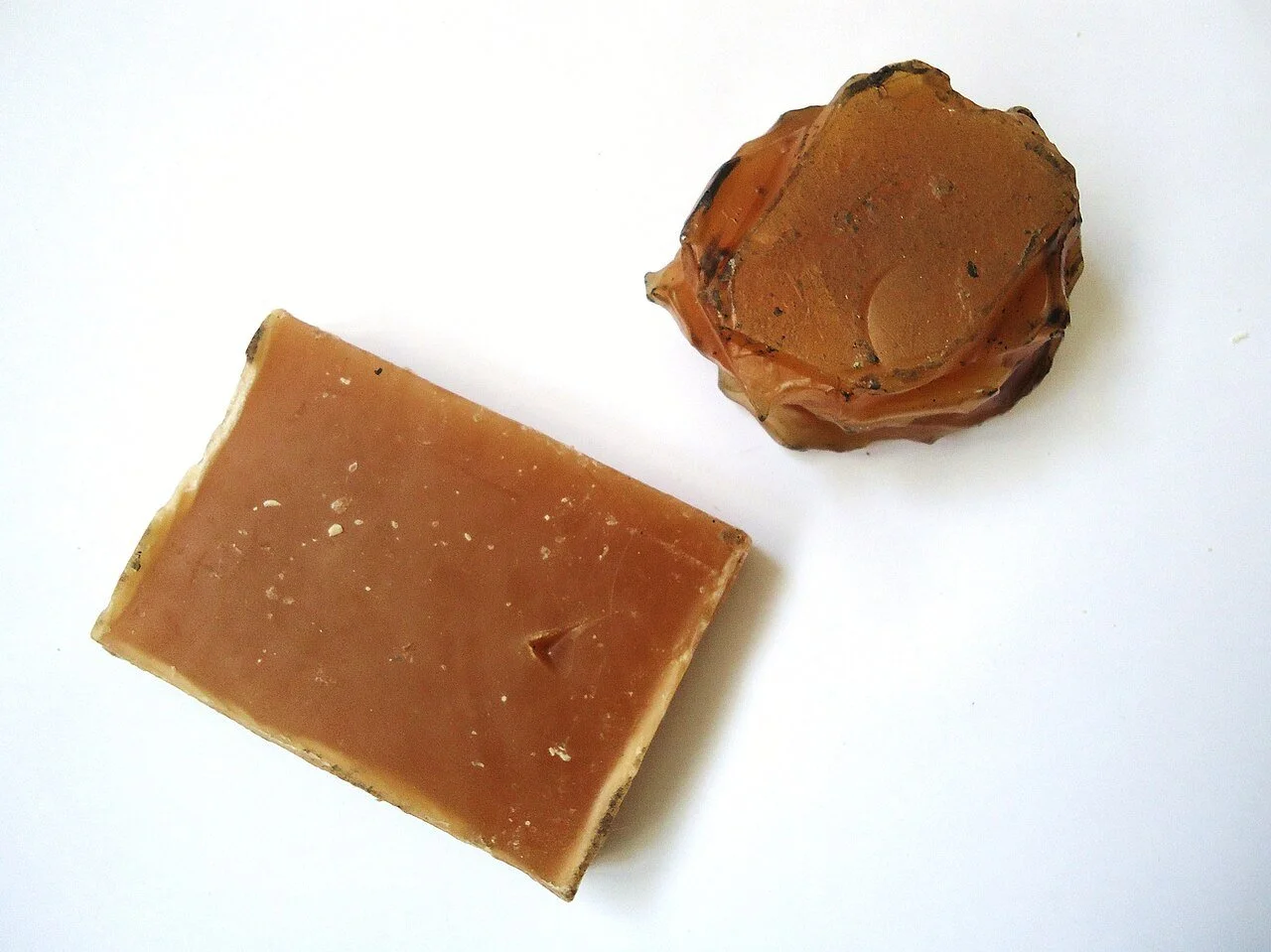
Photos via Wikimedia Commons, left to right: 1 Krigore (CC BY-SA 4.0); 2 Waugsberg (CC BY 2.5); 3 Oshadhi Jayasena (CC BY-SA 4.0); 4 AxelHH (CC BY 3.0); 5 Øyvind Holmstad (CC BY-SA 4.0); 6 Joska16 (CC BY-SA 4.0); 7 Simon A. Eugster (CC BY-SA 3.0); 8 Mauro Cateb (CC BY-SA 3.0).
The rig
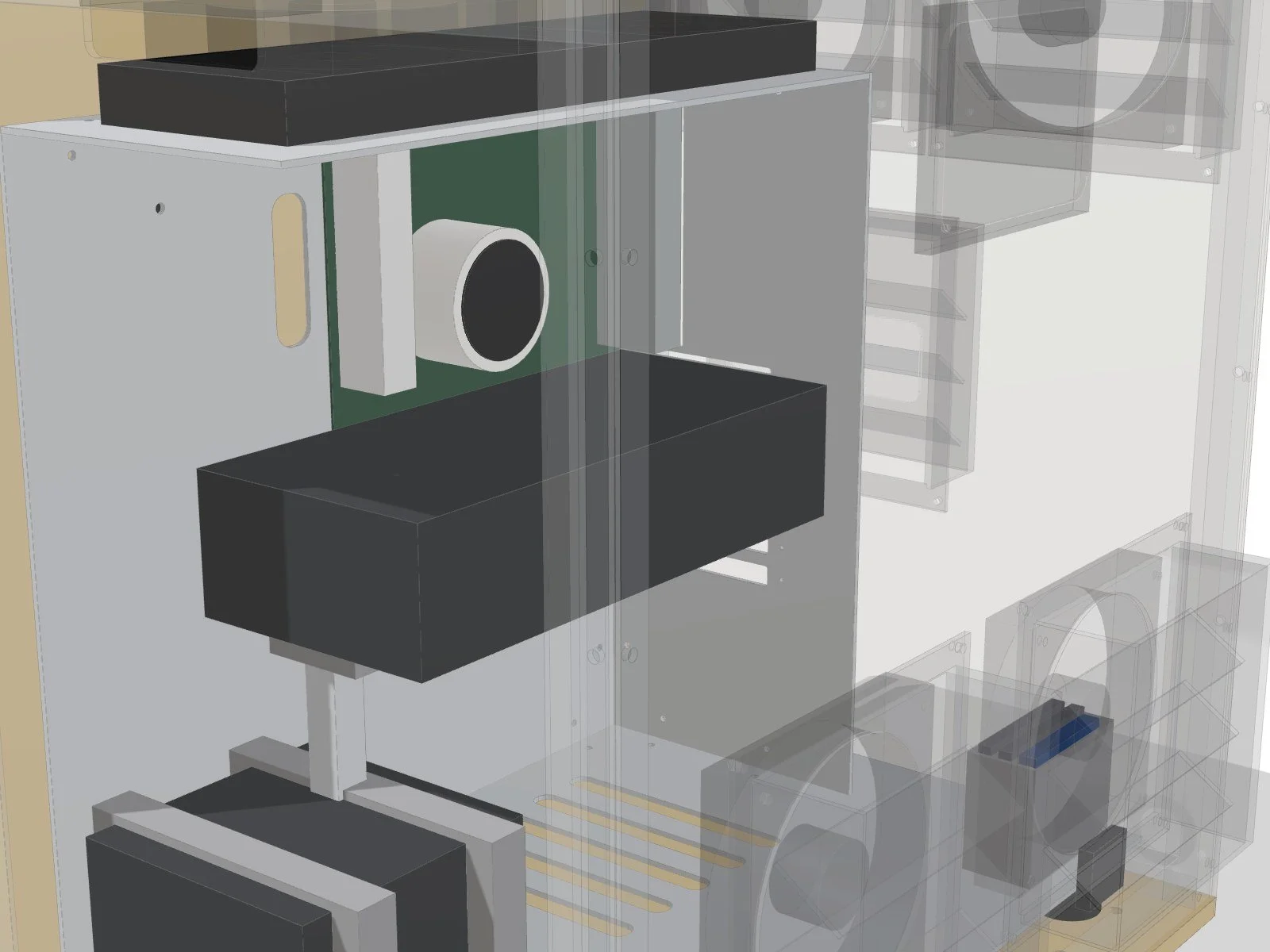
The PC on its own isolated chassis, two new monitors (a 34 in ultrawide and a 15.6 in camera screen), a battery and the cameras in one rolling flight case
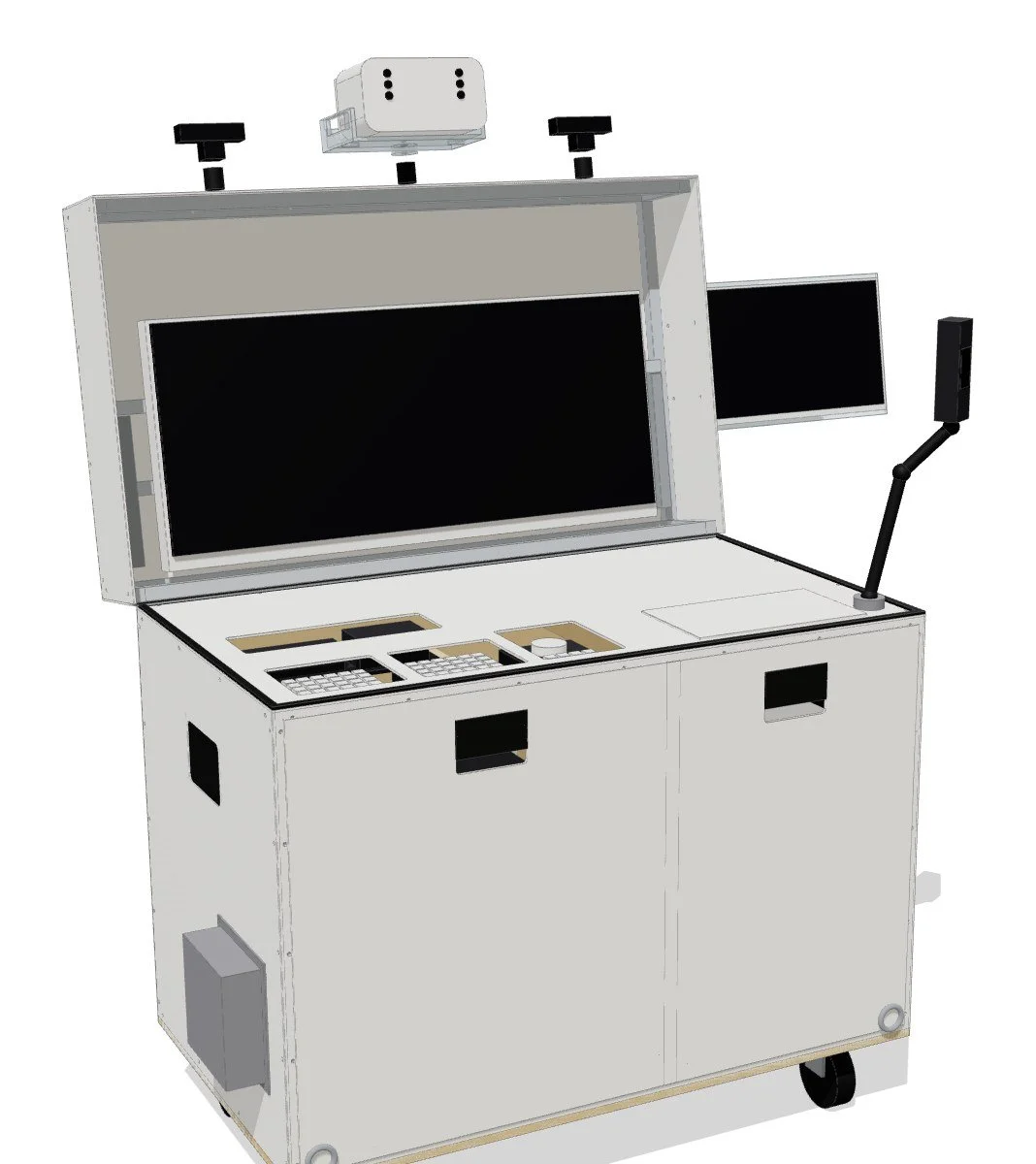
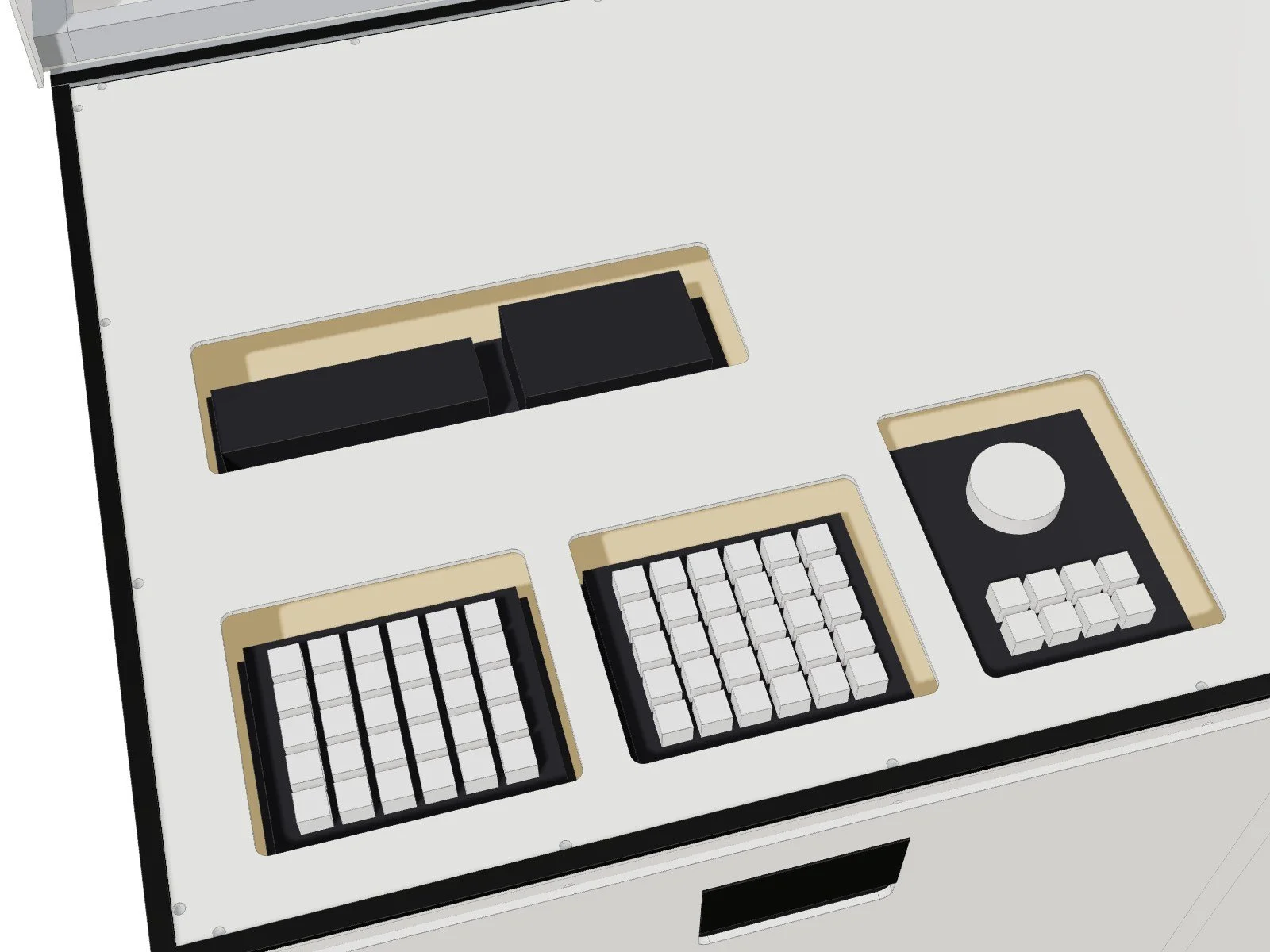
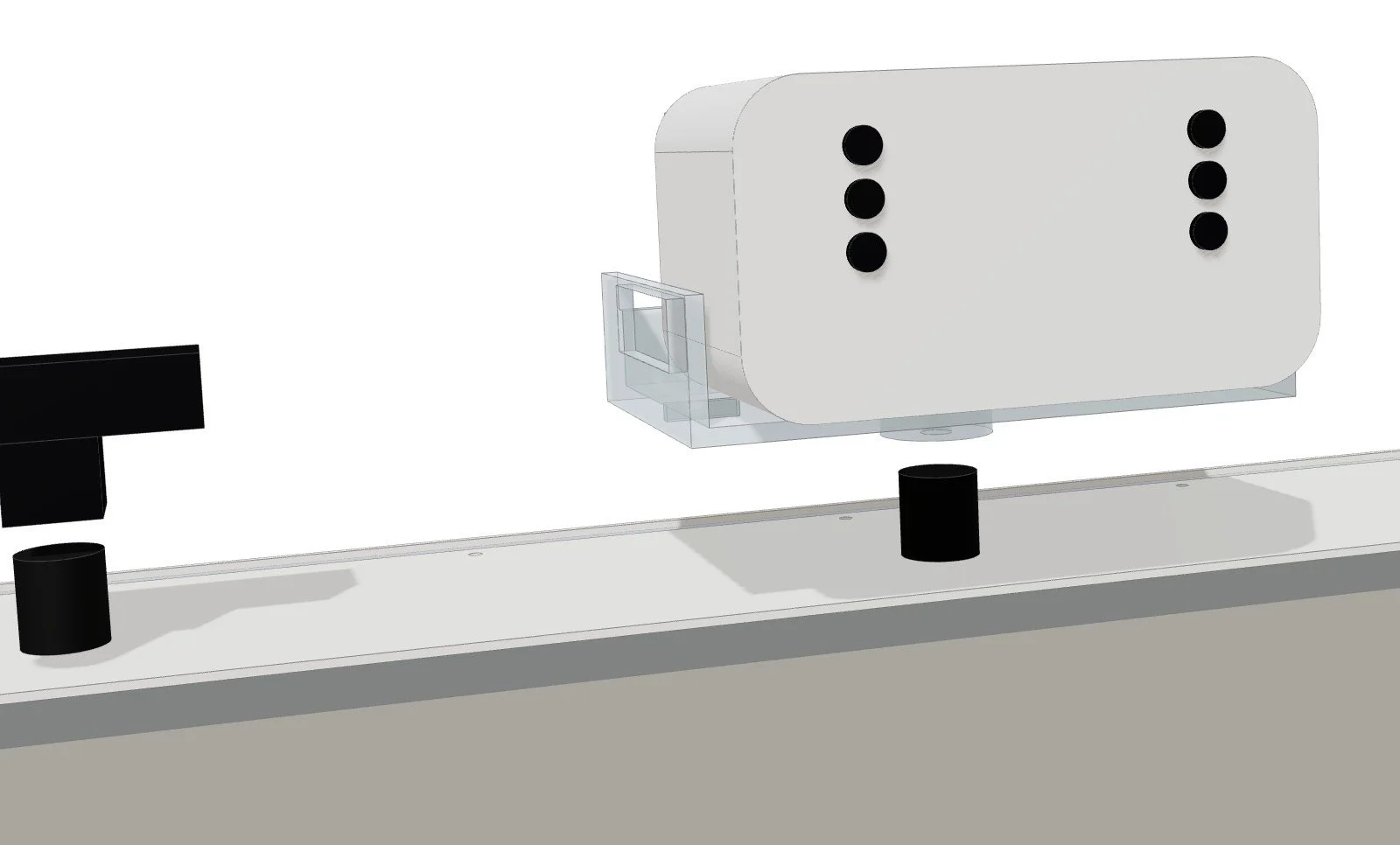
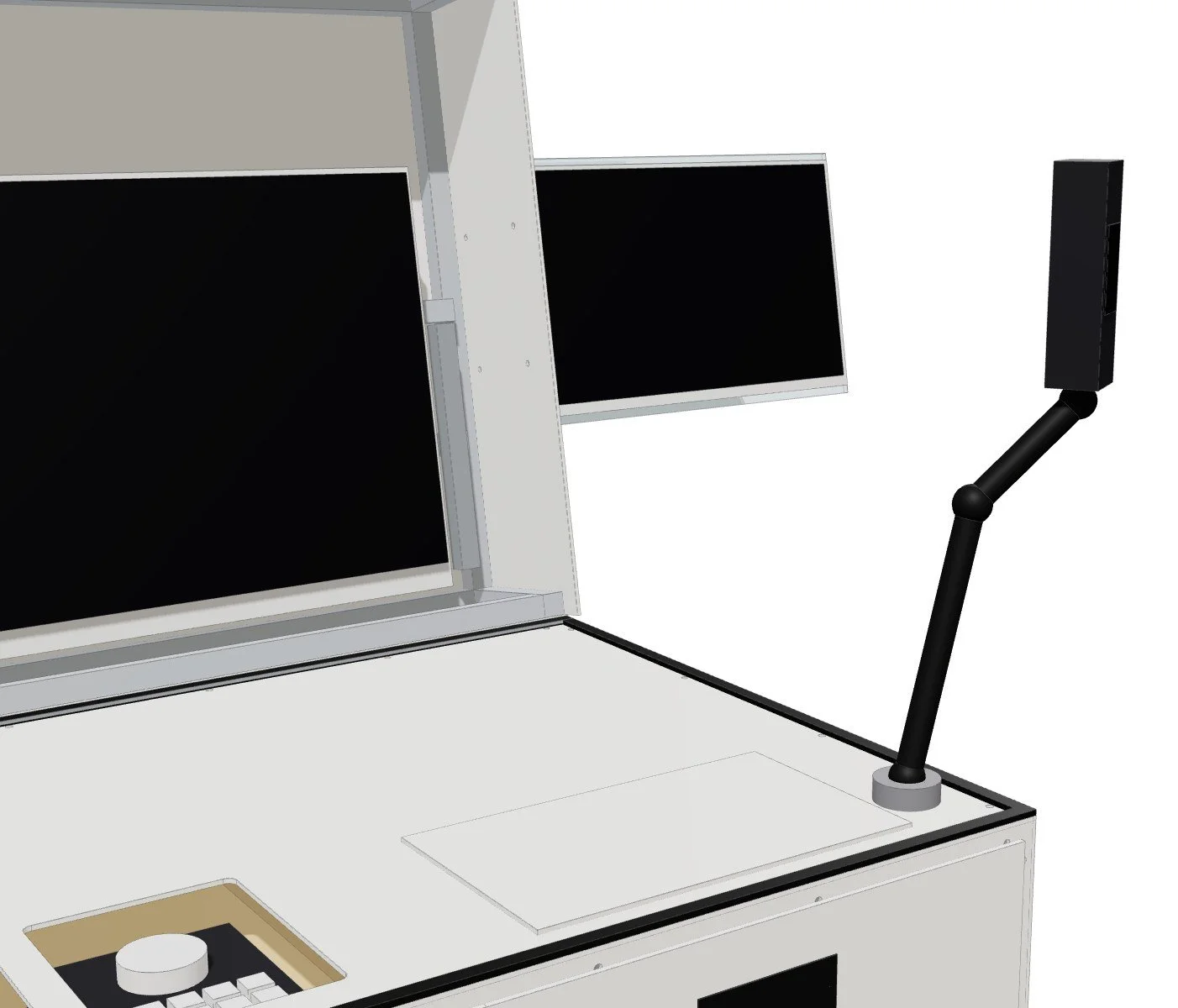
One white box on four casters. Closed, it straps into the back of a Jeep. Open, the lid swings up with the ultrawide already in it, the camera-wall screen clips on the right, the camera Quest 3S and webcams sit on the rail across the top, and the macro pads drop into pockets at desk height. An Osmo Pocket 3 on a magic arm films your hands and face from the right, and the DJI Mic 2 is the speech mic; both charge in a deck dock while the case is closed. The battery is a UPS: unplug it, roll it to another room, and the tower never shuts down.
How it works
Closed: a flight case / open: a workstation
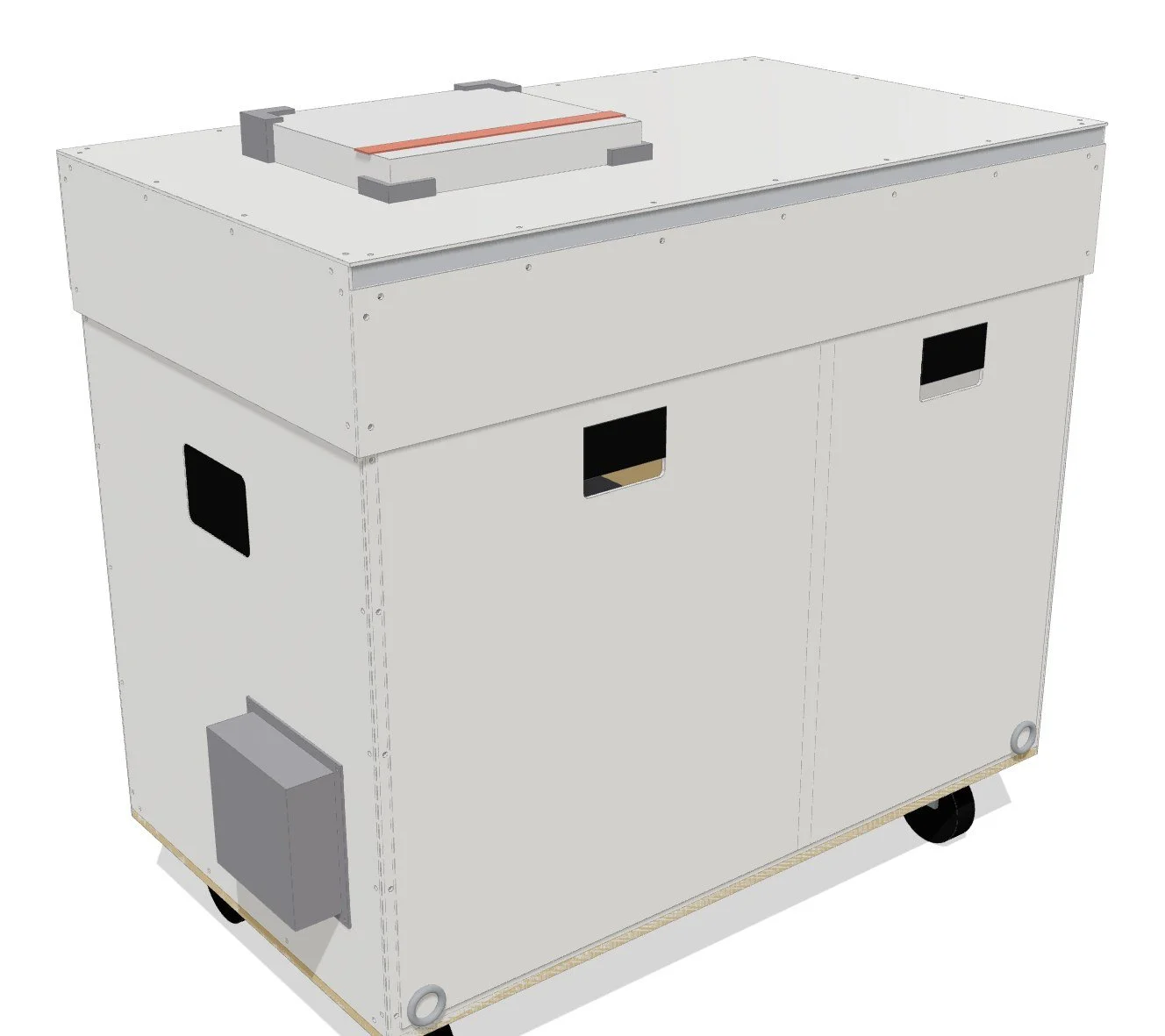
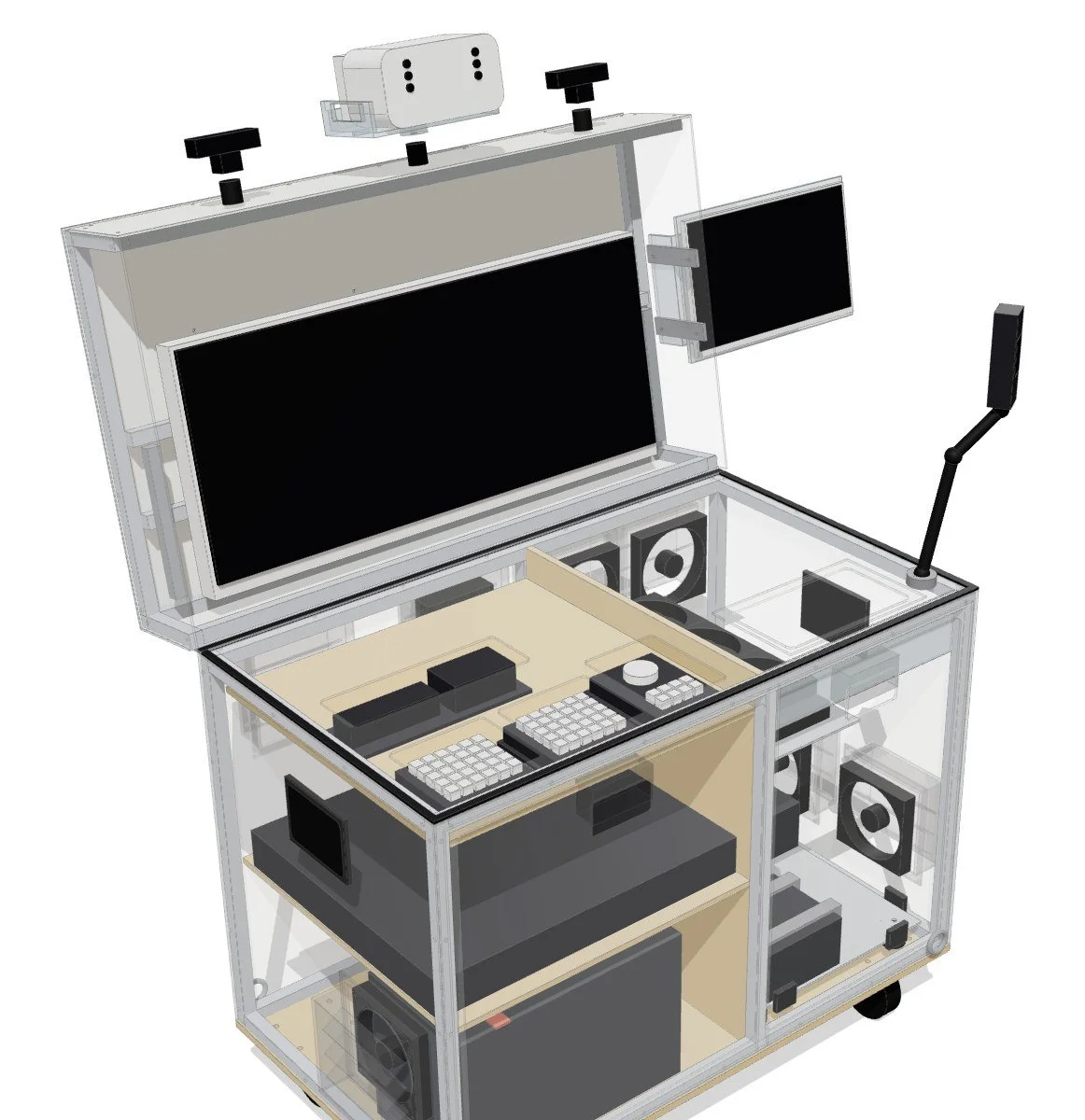
- Closed. Four draw latches, gasketed seams and down-facing hoods on every opening. Drip-resistant, not waterproof. Recessed D-rings strap it to the Jeep's tie-downs.
- Open. The lid rises on two gas struts to 100°. The camera-wall screen drops into two receivers, the Quest and webcams screw onto the lid rail, the Pocket 3's arm screws into a socket at the front-right corner, the pads sit in the deck.
- Rolling. The Anker SOLIX switches over in under 10 ms. A travel router under a rear hood keeps the same network in every room; home Wi-Fi, a phone or Starlink just feed it.
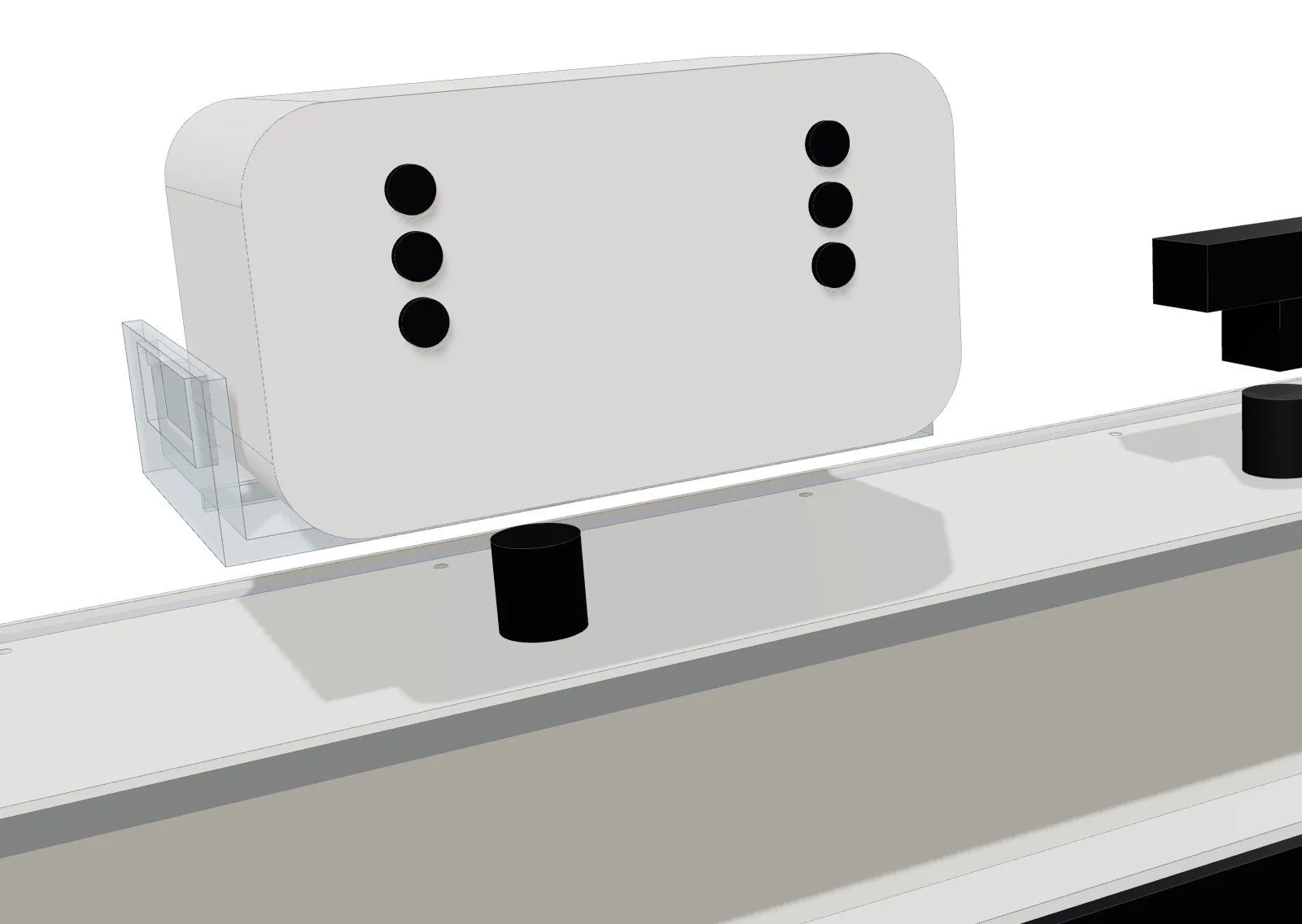
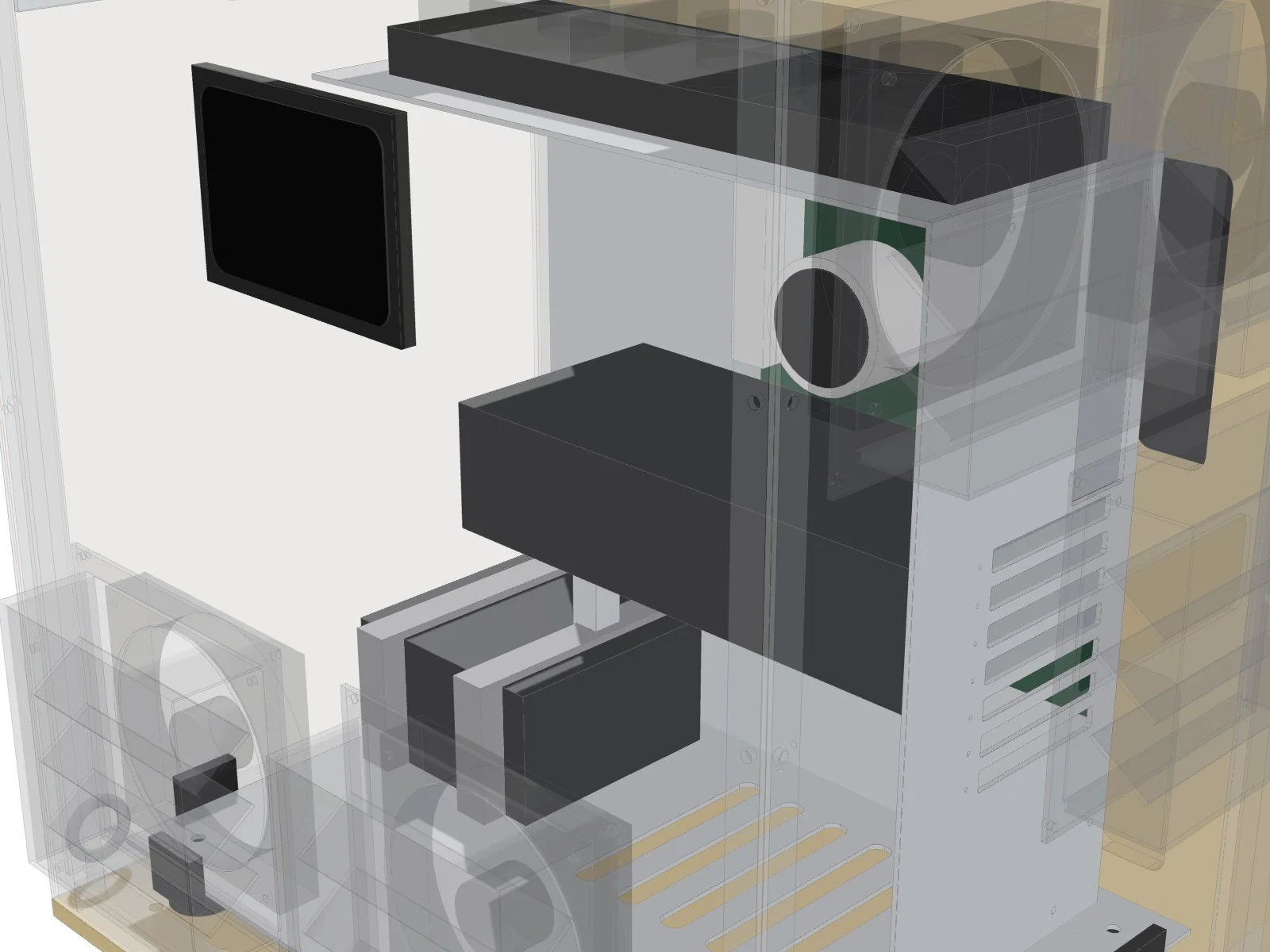
Models in these renders: Meta Quest 3S by og_matter and casters by vector6, both CC BY 4.0 via Sketchfab.
What to buy
45 lines / $2,971.30 before tax / estimates from the design pass
| Displays | 17% | $499.00 |
| Power | 23% | $670.99 |
| Network | 4% | $128.00 |
| Cooling | 7% | $202.00 |
| Frame | 9% | $269.97 |
| Skins | 9% | $255.00 |
| Wood | 4% | $120.00 |
| Hardware | 11% | $327.54 |
| Shock | 3% | $82.00 |
| Mounts | 2% | $47.80 |
| Capture | 3% | $75.00 |
| Chassis (SendCutSend) | 7% | $220.00 |
| Chassis | 2% | $74.00 |
| Parts total | $2,971.30 |
Every part, by section (53 lines)
Displays
Power
 03One Beat short flat-plug power strip, 6 outlets, 15 A$20.00Battery AC out to tower + ultrawide + fans PSUView on Amazon →anker.com043-port 100 W USB-C GaN charger (Anker Prime or similar)$60.00Under the deck dock, fed by the battery AC strip: charges the Pocket 3 and the Mic 2 case through two short right-angle USB-C leads that come up through the dock foamView on anker.com →Amazon0511 13/16 in right-angle USB-C cables$16.00Qty 2 · Dock charging leadsView on Amazon →
Network
 02StarTech 19.69 in slim Cat6 cable (+ 0.98 in rubber grommet)$8.00Tower to router through the rear skinView on Amazon →
 03Bingfu RP-SMA bulkhead extensions 11 13/16 in, 2-pack (fallback only) (optional)$15.00Only if the tower must use its own Wi-Fi instead of Ethernet to the router: the aluminium skins block radio, so its antennas have to come outside.View on Amazon →neutrik.com04Neutrik etherCON NE8FDX-P6-B feedthrough (optional) (optional)$20.00Wired Ethernet through the service plate when a cable is availableView on neutrik.com →starlink.com05Starlink Mini (optional, for sites with no Wi-Fi or Ethernet) (optional)$400.0011.75x10.2x1.516 in, 1.1 kg, 25-40 W typical (spikes higher), 12-48 V DC or 100 W USB-C PD with Starlink's USB-C cable. Rides on the lid top in 4 SLS clips + strap. Needs oView on starlink.com →starlink.com06Starlink USB-C PD to Mini power cable (or the DC car cable) (optional)$35.00Power the Mini from the battery's USB-C (100 W) portView on starlink.com →
Cooling
 025 1/2 in stainless-mesh fan filters, aluminum frame, 2-pack$30.00Qty 3 · On the 3 intakes only, behind the hoods. Run intakes ~15% faster than exhausts for positive pressure (dust stays out).View on Amazon →noctua.at03Noctua NA-SYC1 PWM Y-cable x2 + NA-EC1 extensions$12.00Run the body fans off a motherboard fan header with a temperature curveView on noctua.at →
Frame
 03M5 T-nut and screw kit for 2020, 300 pcs$30.00Qty 1 pack (300) · Skins to frame (holes are in the DXFs) and all accessoriesView on Amazon →
Skins
Wood
Hardware
 02Lokatall 200 N gas struts, 2-pack (check stroke against the lid)$30.00Qty 2 · Lid lift; lid is ~12 kg with the ultrawide. Fit, then tune N.View on Amazon →
 03RUYUFE lid stay with soft close$12.00So the lid can't drop on hands if a strut fadesView on Amazon →
 04BokWin padlockable twist latches, 4-pack$32.00Qty 4 · Lid to body, 2 front + 1 each sideView on Amazon →Penn Elcom05Penn Elcom L905/915K medium recessed butterfly latch$25.94Qty 2 · Doors (check the cutout against panels_dxf/door_*)View on Penn Elcom →mcmaster.com06Door hinges (stainless butt or 23 5/8 in piano)$24.00Qty 4 · Two per doorView on mcmaster.com →Parts Express07Penn Elcom H7159EZ spring-loaded recessed handle$10.60Qty 2 · Left and right sides; cutout in the DXF is 5x3 3/8 in placeholder, match it to the handle you buyView on Parts Express →mcmaster.com084 in polyurethane swivel casters with total lock (>=100 kg each)$100.00Qty 4 · Plate 4x4.5 in, bolt pattern 3-5/8 x 2-5/8 in (in floor_ply.dxf). Quiet room-to-room, unbolt for the Jeep if height is tight.View on mcmaster.com →Uline09Uline H-11364 recessed tie-down D-ring$48.00Qty 4 · Strap the cart to the Jeep's cargo tie-downs (casters locked + 2 ratchet straps)View on Uline →
 10PATIKIL EPDM D-seal 0.35 x 5/16 in, 20 ft$15.00Qty 32.8 ft · Body top edge (lid seal), door openings, hatchView on Amazon →
Shock
 02316 stainless cam buckles for 1 in (0.98 in) webbing, 2-pack$15.00Qty 3 · 2 around the tower + cradle, 1 over the batteryView on Amazon →mcmaster.com03Rubber bobbin isolators M8 male-male, 40 dia x 1 1/2 in, ~40A$24.00Qty 4 · Chassis tray to floor. Rated ~25 kg each in compression; the whole computer chassis is ~12 kg, so they sit soft and soak up Jeep buzz.View on mcmaster.com →Amazon041 in (0.98 in) PE foam plank 2.2 pcf$20.00Pad pocket floors and DJI dock liner (the computer no longer needs foam blocks)View on Amazon →
Mounts

Capture
Chassis
Computer
What to cut and print
ACM skins by a sign shop / acrylic on the xTool / SLS nylon sent out
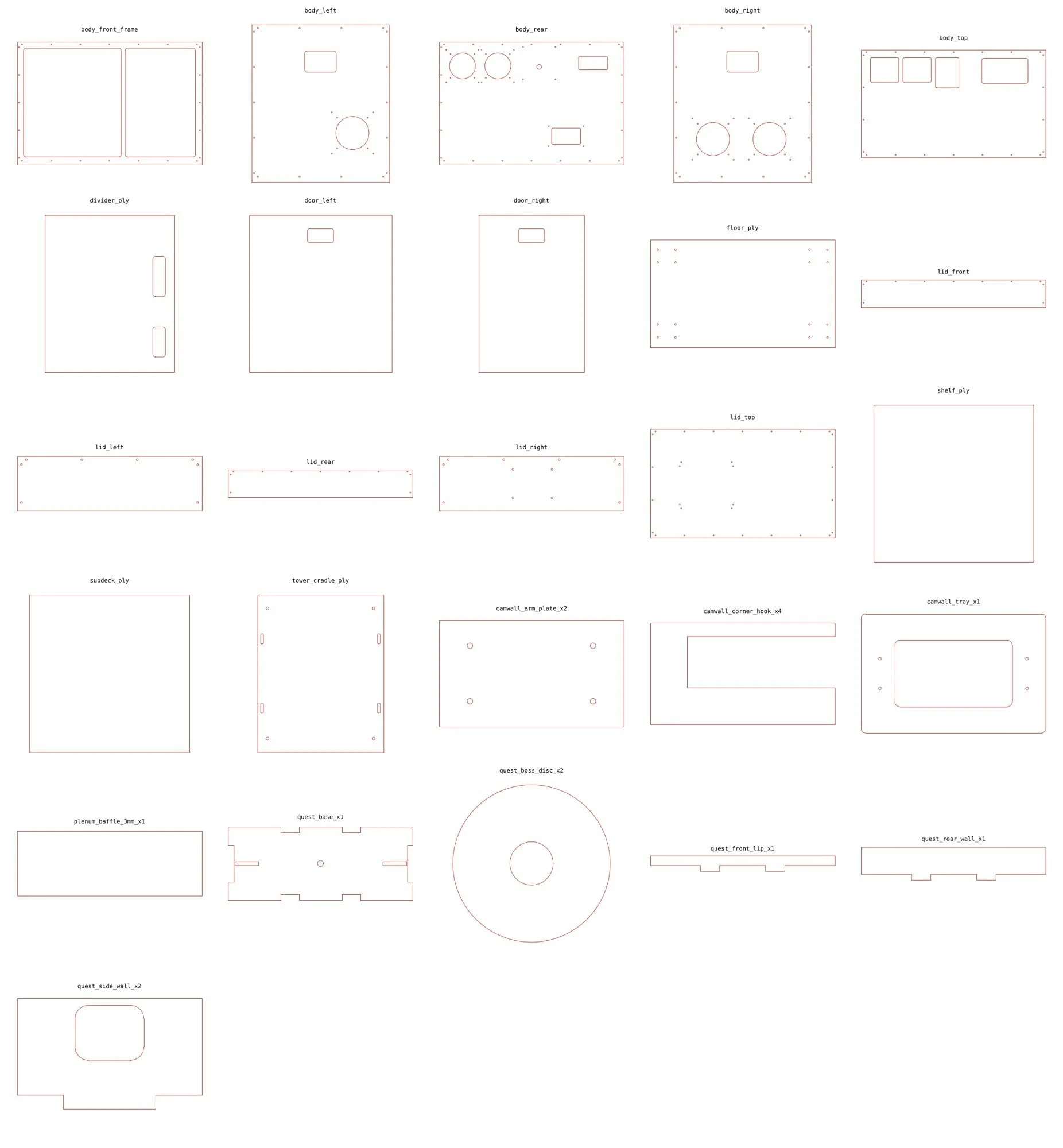
| ACM skins, 12 panels0.12 in white Dibond, CNC routed from the DXFs with every hole and cutout | quote |
| Plywood floor, divider, cradle, shelf, sub-deck0.47 and 0.35 in Baltic birch | in house |
| Acrylic, one sheetQuest cradle, camera-wall tray, arm and hooks, 0.24 in | xTool |
| Rain hoods ×8SLS PA12, openings face down | ~$200 |
| SSD caddy, rail adapters, receivers, Starlink clipsSLS PA12 | ~$55 |
| 2020 frame, 26 pieces, 54.5 ftCut to length by Misumi | in buy list |
Print prices are rough per-part figures; Xometry will quote higher than JLC3DP. The sign shop needs a quote.
Build steps and numbers
- Measure first: the macro pads, the Quest visor height and the PC parts. Every size is a parameter at the top of rig.py.
- Have a sign shop route the ACM panels; cut the plywood parts from printouts.
- Assemble the 2020 frame with cast corner brackets. Body first, then lid.
- Bolt the casters through the floor, then the 0.12 in aluminium PC chassis on its rubber isolators.
- Skin the body with M5 button heads into drop-in T-nuts; fit the EPDM gasket.
- Mount fans, filters, hoods and the powerCON inlet; run the fans off a motherboard header.
- Hang the lid on the piano hinge with gas struts and the locking stay; mount the ultrawide.
- Laser cut the acrylic; glue the Quest cradle with Weld-On 4.
- Battery in its bay. Move the PC parts out of the NZXT case onto the chassis: board plate, GPU saddle, radiator and PSU clamps.
- Pull the plug with the PC under load and check it rides through.
- ~4 h
- Idle with both monitors, about 200 W.
- ~2 h
- Fairy Ring running, about 400 W.
- ~1.2 h
- GPU flat out, about 700 W.
- 106 CFM
- About 54 °F over room air at 700 W.
- 30.2 in
- Deck height. The casters unbolt for the Jeep.
Anchor tags
Engraved and cut on the xTool / 24 cards
| Rowmark LaserMax 2-ply, white over black, 1/16 in (part LM922-204), 12 x 24 in sheets12 · 24 anchor-tag cards at 8 x 10 in, two per sheet. Engrave on the xTool P3 | $144.00 |
| Woodpeckers 1/8 in Baltic birch 12 x 24 in, box of 66 · Stiff backing for the bench, floor and machine tags | $24.00 |
| Scotch-Mount clear double-sided tape, 1 x 125 in1 · Laminate to ply backer | $8.00 |
Black fill is the tag, red hairline is the cut, and the black square must measure exactly 6 in.
Waste less
Six rules the whole system is built around
- Make it once. Seeing a piece full size in the room before cutting anything catches the wrong size, the wrong proportion and the wrong wood. The best scrap is the one never made.
- Cut what you need. Fairy Ring nests parts on the sheet and writes the cut list from the model, so boards are bought to length and offcuts are tracked.
- Grow, don't buy foam. Packaging, inserts and insulating forms come from Mother instead of polystyrene.
- Loop the plastic. Failed prints and trimmed vacuum-formed sheet go to Lazarella. Brims and wax scrap go back to Queen Bee.
- Wash the formwork. Mud Diva's clay molds are slaked and reused, so the only waste from a concrete pour is the water.
- Small machines, small power. Every dancer is a desktop machine. The whole ring at once draws less than one shop dust collector.
The research
Studies behind the materials
The numbers behind those rules, from published studies.
Cement is the binder in concrete, and making it releases about 8% of the world's CO₂. That's why Mud Diva prints thin, only where the part needs it, into clay formwork that is washed off and reused.
Chatham House, Making Concrete Change (2018) →
Mycelium composites are fungal root grown through farm waste like hemp hurd. Reviews find them low-energy to make, light, insulating, and compostable at the end of their life, with weak points too: they soak up water and aren't structural. Mother uses them for shapes, packaging and insulating forms, sealed when they'll see water.
Jones et al., Materials & Design (2020), engineered mycelium composites review →
How the mycelium is fed, packed and pressed changes how strong, dense and water resistant it ends up. That's why Mother packs every mold by weight, and why the drying is tested.
Appels et al., Materials & Design (2019) →
Turning waste plastic into filament at home, rather than making new filament in a factory, saved from 3% to over 80% of the energy, depending on where you live and how the power is made.
Kreiger, Mulder, Glover & Pearce, Journal of Cleaner Production (2014) →
Pairing a recyclebot with a 3D printer in the same shop, so failed prints become new filament, cut the embodied energy of the parts in half and their cost to pennies. Lazarella is that loop.
Zhong & Pearce, Resources, Conservation & Recycling (2018) →
Only about 9% of the world's plastic waste is recycled. The rest is burned, landfilled or leaks into the environment. Keeping shop plastic in a loop is a small piece of that.
OECD, Global Plastics Outlook (2022) →
Simple arithmetic: a 1 in board resawn as solid stock gives two faces, but sliced into veneer about 0.024 in thick it gives dozens of leaves, each one a full face. Figured and rare woods go furthest that way, which is why Drag Queen works in veneer.
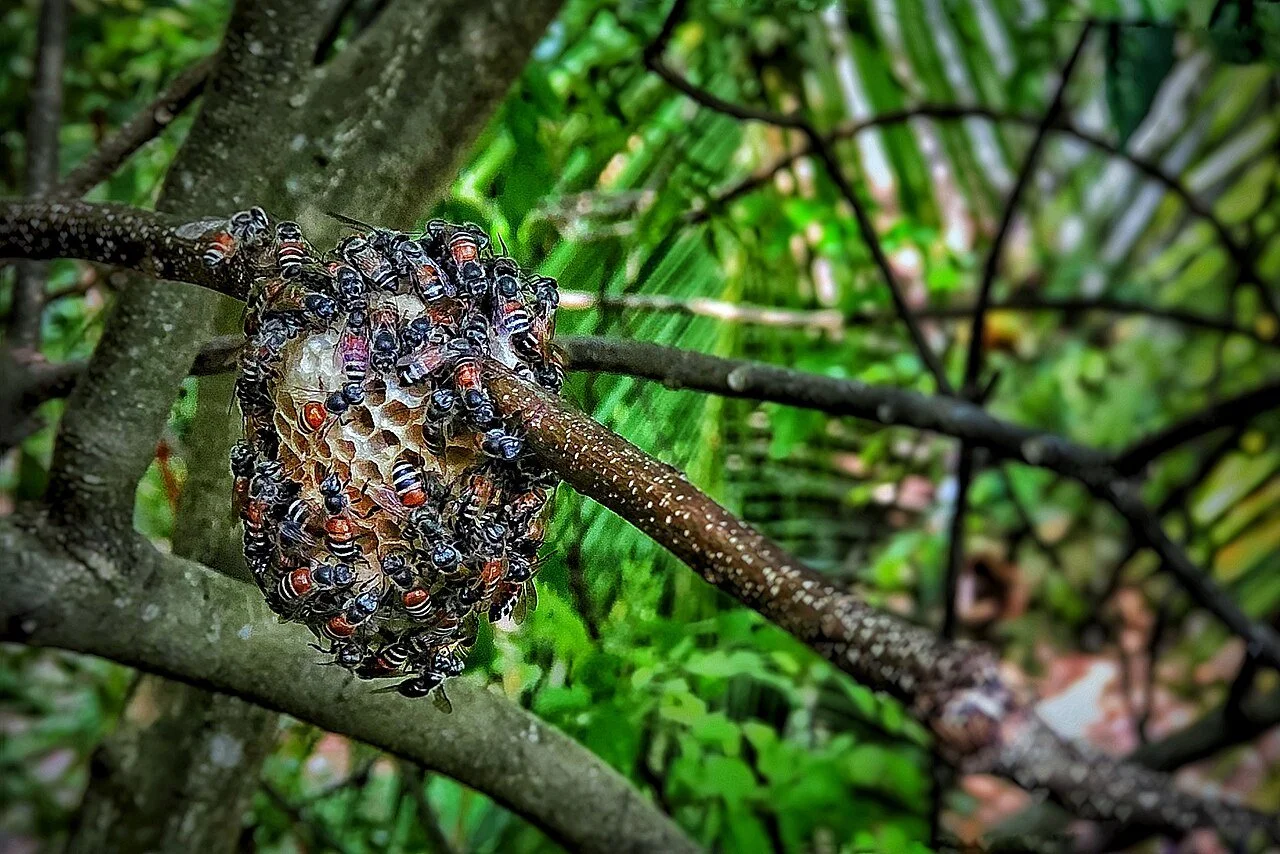
A hive makes only a pound or two of wax a year, and bees eat a lot of honey to make it. Queen Bee's wax is precious, so every brim and failed print gets remelted, and casting work leans on the 80 / 20 blend.
FAO, Value-added products from beekeeping →
Questions
The ones people ask first
Do I need to know CAD?
No. You talk and point. Fairy Ring turns that into a real CAD model with exact sizes. If you do know CAD, the model exports as STEP, STL and DXF.
Does it buy things on its own?
Never. It builds the cart and the total, and you decide.
What does it run on?
A gaming PC in the rig, two Meta Quest 3S headsets, and Claude for anything that isn't a simple command.
How exact is it?
The model is exact. Hand gestures land within a few millimetres, and you can always say the number instead.
Can the machines run while I'm away?
Some can. Handmaiden swaps plates and loads sheets so printers and the laser can work through a queue. Nothing with a flame or a spindle runs alone.
Is it safe?
Each machine has its own safety notes in its recipes. The rules everywhere: a fire extinguisher by the laser, gloves for cement and hot sheet, a mask for dust and grows, and never leave heat or a spindle running alone.
Is any of it built yet?
The software runs. The machines are designed with full parts lists and files, and they're being built now.